




What are the differences between Electro - Thermal Actuators and piezoelectric actuators?
 Jul 08, 2025|
 Hey there! As an electro - thermal actuator supplier, I've been in the thick of the actuator game for quite a while. One question that pops up a lot is, "What are the differences between electro - thermal actuators and piezoelectric actuators?" Well, let's dig in and break it down.
How They Work
Let's start with the basics: how these two types of actuators actually work.
Electro - Thermal Actuators
Electro - thermal actuators work on the principle of thermal expansion. When an electric current passes through a heating element inside the actuator, it heats up. This heat causes a material (usually a wax or a metal alloy) to expand. As this material expands, it generates a force that can be used to move a mechanical component, like a valve stem.
For example, in our M30*1.5 Normally Closed Open Thermal Actuator For Water Floor Heating, the heating element warms up the wax. As the wax expands, it pushes a piston, which then opens or closes the valve for the water floor heating system. It's a simple yet effective way to control the flow of fluids based on temperature changes.
Piezoelectric Actuators
Piezoelectric actuators, on the other hand, rely on the piezoelectric effect. Certain materials, like quartz or ceramics, generate an electric charge when they are mechanically stressed. Conversely, when an electric field is applied to these materials, they change shape. This shape change is extremely small but can be used to generate precise movements.
Imagine you have a tiny piezoelectric actuator in a precision positioning system. When you apply an electric voltage, the actuator will deform by a very specific amount. This allows for incredibly accurate control of the position of a component, like a microscope stage or a fiber - optic alignment system.
Performance Characteristics
Now, let's talk about how these two types of actuators perform in different aspects.
Force and Stroke
Electro - thermal actuators are great when you need a relatively large force. The thermal expansion of the material can generate significant pressure, which makes them suitable for applications where you need to move heavy or resistant components. For instance, our Underfloor Heating Actuator can generate enough force to open and close valves in a water - based underfloor heating system, even when there's some resistance from the water pressure.
However, the stroke (the distance the actuator can move) of electro - thermal actuators is usually limited. The expansion of the thermal material has a physical limit, so the movement range is not as large as some other types of actuators.
Piezoelectric actuators, on the other hand, have a very small stroke. The shape change of the piezoelectric material is minuscule, typically in the range of micrometers or even nanometers. But they can generate high forces relative to their size. They are ideal for applications where you need precise, small - scale movements, like in micro - robotics or precision manufacturing.
Speed of Response
When it comes to speed, piezoelectric actuators are the clear winners. They can respond almost instantaneously to changes in the applied electric field. This makes them perfect for applications that require high - speed movements, such as in high - speed printing or fast - switching optical devices.
Electro - thermal actuators, unfortunately, are much slower. The heating and cooling process of the thermal material takes time. It can take several seconds or even minutes for an electro - thermal actuator to reach its full stroke or return to its original position. So, if you need a quick response, electro - thermal actuators might not be the best choice.
Precision and Repeatability
Piezoelectric actuators are known for their high precision and repeatability. Since the shape change of the piezoelectric material is directly proportional to the applied electric field, you can control the movement of the actuator with extreme accuracy. This is crucial in applications like semiconductor manufacturing, where even the slightest deviation can lead to defective products.
Electro - thermal actuators are less precise. The thermal expansion process can be affected by factors like ambient temperature and the rate of heating. This means that the movement of the actuator might not be as consistent or accurate as that of a piezoelectric actuator.
Energy Consumption and Efficiency
Energy consumption is an important factor to consider when choosing an actuator.
Electro - Thermal Actuators
Electro - thermal actuators consume a relatively large amount of energy, especially when they are in the heating phase. The heating element needs to draw power continuously to maintain the temperature and keep the actuator in the desired position. However, once the actuator has reached its operating temperature and is holding its position, the energy consumption can be reduced.
Piezoelectric Actuators
Piezoelectric actuators are generally more energy - efficient. They only consume power when there is a change in the applied electric field. Once the actuator has reached its desired position, it can hold that position without consuming any additional energy. This makes them a great choice for battery - powered or energy - sensitive applications.
Cost and Maintenance
Cost is always a concern for any business or project.
Electro - Thermal Actuators
Electro - thermal actuators are usually more affordable in terms of upfront cost. They have a simpler design and use relatively common materials, which keeps the manufacturing cost down. For example, our Zigbee Electric Thermal - Electric Actuator offers a cost - effective solution for controlling underfloor heating systems.
In terms of maintenance, electro - thermal actuators are relatively easy to maintain. The main components are the heating element and the thermal material, which are not overly complex. As long as the heating element doesn't burn out and the thermal material doesn't degrade, the actuator can last for a long time.
Piezoelectric Actuators
Piezoelectric actuators are more expensive. The piezoelectric materials are often specialized and require precise manufacturing processes, which drives up the cost. Additionally, the control electronics for piezoelectric actuators can be quite complex, adding to the overall expense.
Maintenance of piezoelectric actuators can be more challenging. The piezoelectric materials are sensitive to mechanical stress and electrical over - voltage. If not handled properly, they can be damaged easily, which might require professional repair or replacement.
Applications
Based on their characteristics, electro - thermal and piezoelectric actuators are used in different applications.
Electro - Thermal Actuators
Electro - thermal actuators are commonly used in heating, ventilation, and air - conditioning (HVAC) systems. They are perfect for controlling the flow of water or air in these systems because they can generate enough force to open and close valves. They are also used in some household appliances, like smart thermostats, to control the temperature.
Piezoelectric Actuators
Piezoelectric actuators are widely used in precision engineering, medical devices, and aerospace applications. In precision engineering, they are used for positioning components with high accuracy. In medical devices, they can be used for ultrasonic imaging or drug delivery systems. In aerospace, they are used for vibration control and active damping.
Conclusion
So, as you can see, electro - thermal actuators and piezoelectric actuators have their own unique features and advantages. If you need a cost - effective solution for applications that don't require high - speed or extreme precision, electro - thermal actuators might be the way to go. On the other hand, if you need high - precision, high - speed movements, piezoelectric actuators are the better choice.
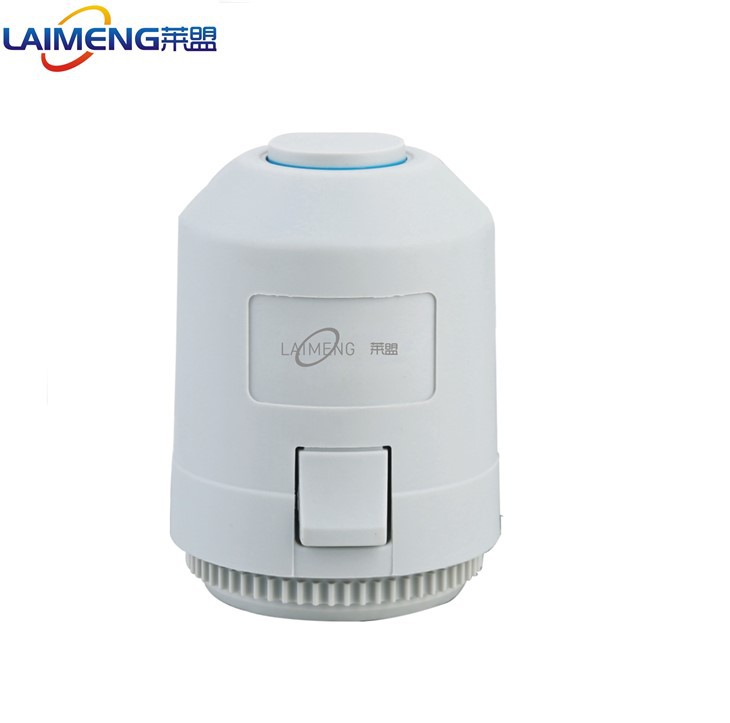

As an electro - thermal actuator supplier, I'm here to help you find the right actuator for your specific needs. Whether you're working on a small - scale DIY project or a large - scale industrial application, we have a range of electro - thermal actuators that can meet your requirements. If you're interested in learning more or want to start a procurement discussion, feel free to reach out. We're always happy to talk about how our products can fit into your projects.
References
- "Actuator Handbook" by William A. Klos.
- Journal articles on electro - thermal and piezoelectric actuator technology from IEEE and ASME.