




How does the Mixed Water Center manage its water supply?
 Jan 01, 2026|
 Hey there! I'm a supplier for a Mixed Water Center, and today I wanna chat about how this amazing place manages its water supply. It's a pretty cool operation, and I've seen firsthand the ins and outs of it.
First off, let's talk about what a Mixed Water Center actually is. It's basically a facility that combines different sources of water to meet specific needs. This could be for industrial use, like in manufacturing processes where precise water temperatures and qualities are required. Or it could be for commercial buildings, like hotels and hospitals, where a consistent supply of hot and cold water is essential for daily operations.
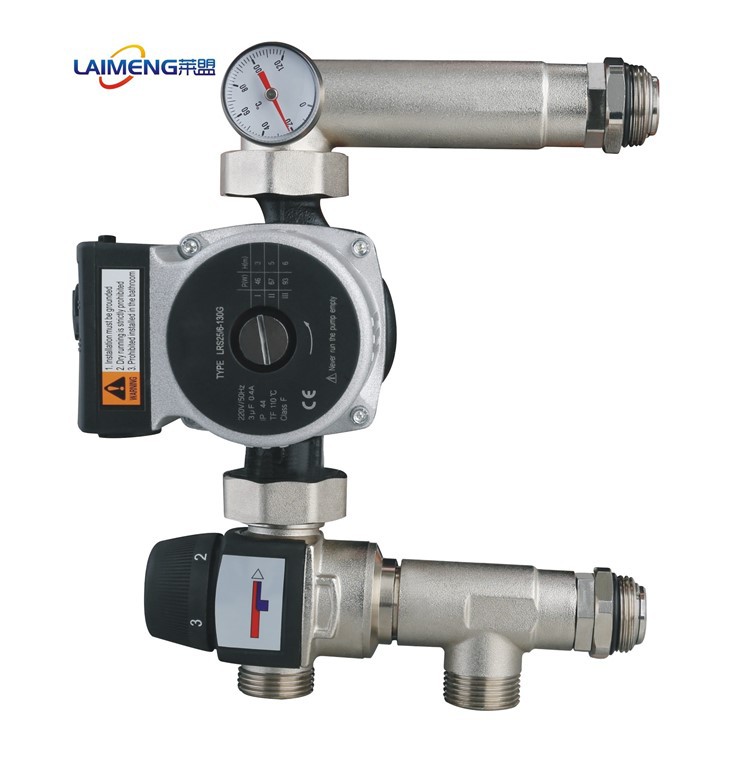
One of the key components in managing water supply at a Mixed Water Center is the Water Mixing Pump With Pump Water Mixing Pump With Pump. These pumps are like the workhorses of the center. They're responsible for moving water from different sources, whether it's a cold water tank or a hot water heater, and mixing it to the right temperature. They've gotta be powerful and reliable because any hiccup in the pumping process can throw off the whole water supply system.
The pumps work in tandem with another important piece of equipment: the Thermostatic Mixing Valve Thermostatic Mixing Valve. This little gadget is a genius invention. It senses the temperature of the incoming water and adjusts the flow of hot and cold water accordingly. So, if the water coming in is too hot, it'll let more cold water in to bring the temperature down. And if it's too cold, it'll increase the flow of hot water. It's all about maintaining that perfect temperature, which is crucial for a lot of applications.
Now, let's get into the details of how the water supply is managed step - by - step.
Step 1: Water Sources
A Mixed Water Center usually gets water from multiple sources. There's the main municipal water supply, which is the most common source for cold water. This water is treated by the local water authority to meet certain safety standards. But for some industrial applications, the center might also have its own well water source. Well water can have different mineral contents and qualities, so it needs to be carefully tested and treated before it can be used.
On the hot water side, there are usually large - scale water heaters. These can be gas - powered, electric, or even solar - powered in some eco - friendly centers. The hot water is stored in insulated tanks to keep it warm until it's needed.

Step 2: Pre - treatment
Before the water can be mixed, it often goes through a pre - treatment process. This is especially important if the water has impurities or if the specific application requires a very high - quality water supply. For example, in a hospital, the water needs to be free of bacteria and other contaminants. So, the water might go through filtration systems, which can remove particles like sand, dirt, and rust. It might also go through a softening process to remove minerals like calcium and magnesium, which can cause scaling in pipes and equipment.
Step 3: Mixing Process
Once the water from different sources is pre - treated, it's time for the mixing. This is where the Water Mixing Pump With Pump and the Thermostatic Mixing Valve come into play. The pumps draw the hot and cold water from their respective sources and send them through the mixing valve. The valve then adjusts the ratio of hot to cold water based on the desired temperature.
For example, in a hotel, the ideal water temperature for showers might be around 110°F (43°C). The thermostatic mixing valve will constantly monitor the temperature of the water coming out of the mixing process and make adjustments as needed. If the temperature starts to drift up or down, it'll quickly correct it to keep it at the set point.
Step 4: Distribution
After the water is mixed to the right temperature, it's ready to be distributed to its final destination. This is done through a network of pipes. The pipes need to be properly sized and insulated to ensure that the water doesn't lose heat during transportation. In a large commercial building, there might be a complex system of pipes that branch out to different floors and rooms.
The water pressure also needs to be carefully regulated. If the pressure is too high, it can cause damage to the pipes and fixtures. If it's too low, the water might not reach all the areas that need it. So, there are usually pressure regulators installed at different points in the system to keep the pressure at an optimal level.
Step 5: Monitoring and Control
Managing the water supply at a Mixed Water Center isn't a one - time thing. It requires continuous monitoring and control. There are sensors installed throughout the system to measure things like water temperature, pressure, and flow rate. These sensors send data to a central control system, which can be accessed by the operators.
The operators can then use this data to make adjustments to the system. For example, if they notice that the water temperature in a certain area is too high, they can adjust the settings on the thermostatic mixing valve or the pumps. This real - time monitoring helps to ensure that the water supply is always consistent and meets the required standards.
The Role of a Supplier
As a supplier to the Mixed Water Center, I play an important role in keeping this whole operation running smoothly. I provide the high - quality equipment like the Water Mixing Pump With Pump and the Thermostatic Mixing Valve. I also offer maintenance and repair services to make sure that the equipment is always in top shape.
If there's a problem with the pumps or the valves, I'm just a phone call away. I keep a stock of spare parts so that I can quickly replace any faulty components. And I'm always up - to - date with the latest technological advancements in the water mixing industry, so I can offer advice on how to improve the efficiency and performance of the water supply system.
In conclusion, managing the water supply at a Mixed Water Center is a complex but fascinating process. It involves a combination of high - tech equipment, careful pre - treatment, and continuous monitoring. If you're in the market for a reliable water supply solution for your industrial or commercial needs, then a Mixed Water Center like the one I supply to could be the answer. And if you're interested in learning more or even starting a purchase negotiation, just reach out. I'm here to help you find the best setup for your specific requirements.
References:
- General knowledge of water supply systems in industrial and commercial settings
- Manufacturer specifications for Water Mixing Pump With Pump, Thermostatic Mixing Valve, and other related equipment