




Can Electro - Thermal Actuators be used in underwater applications?
 Dec 10, 2025|
Can Electro - Thermal Actuators be used in underwater applications?
As a supplier of electro - thermal actuators, I've often been asked about the feasibility of using these devices in underwater applications. Electro - thermal actuators are fascinating pieces of technology that convert electrical energy into thermal energy, which in turn is used to generate mechanical motion. Their simple design and high force - to - volume ratio make them appealing for a wide range of applications. But can they be effectively employed underwater? Let's explore this question in detail.
How Electro - Thermal Actuators Work
Before delving into underwater applications, it's essential to understand how electro - thermal actuators operate. These actuators typically consist of a material that expands or contracts when heated. A common example is a shape - memory alloy (SMA), which can "remember" a particular shape and return to it when heated above a certain temperature. When an electric current is passed through the SMA, it heats up due to the electrical resistance of the material. This heating causes the SMA to change its shape, generating a mechanical force that can be used to perform work.
Another type of electro - thermal actuator uses a bimetallic strip. A bimetallic strip is made of two different metals bonded together. Each metal has a different coefficient of thermal expansion. When heated, the two metals expand at different rates, causing the strip to bend. This bending motion can be harnessed to actuate a mechanism.
Challenges of Underwater Applications
Using electro - thermal actuators underwater presents several challenges. One of the most significant issues is electrical insulation. Water is a conductor of electricity, and if the electrical components of the actuator are exposed to water, it can lead to short - circuits, corrosion, and ultimately, failure of the device. To overcome this, the actuator must be properly encapsulated in a waterproof material. This encapsulation not only protects the electrical parts from water but also provides mechanical protection against the high pressures and abrasive particles that are often present in underwater environments.
Another challenge is heat transfer. In air, heat is dissipated relatively slowly, allowing the actuator to reach and maintain the required operating temperature. Underwater, however, water has a much higher thermal conductivity than air. This means that heat is transferred away from the actuator much more quickly, making it difficult to achieve and sustain the necessary temperature for proper operation. To address this, the actuator may need to be designed with a higher power output or better insulation to reduce heat loss.

Corrosion is also a major concern. Saltwater, in particular, is highly corrosive and can quickly damage the materials used in the actuator. The actuator's components need to be made of corrosion - resistant materials such as stainless steel, titanium, or special polymers. Additionally, protective coatings can be applied to further enhance the corrosion resistance.
Potential Underwater Applications
Despite the challenges, there are several potential underwater applications for electro - thermal actuators. One such application is in underwater robotics. Electro - thermal actuators can be used to control the movement of robotic arms, grippers, and other appendages. Their high force - to - volume ratio makes them suitable for compact robotic designs, where space is limited. For example, in a small underwater inspection robot, electro - thermal actuators can be used to open and close sampling devices or adjust the position of sensors.
Another application is in oceanographic research equipment. Electro - thermal actuators can be used to operate valves in water sampling devices or to adjust the position of sensors in oceanographic buoys. These actuators can provide precise control over the movement of the equipment, allowing for accurate data collection.
In the oil and gas industry, electro - thermal actuators can be used in subsea valves and control systems. They can be used to open and close valves in pipelines, regulate the flow of fluids, and perform other control functions. The ability of electro - thermal actuators to generate high forces in a compact package makes them well - suited for these applications.
Our Solutions as a Supplier
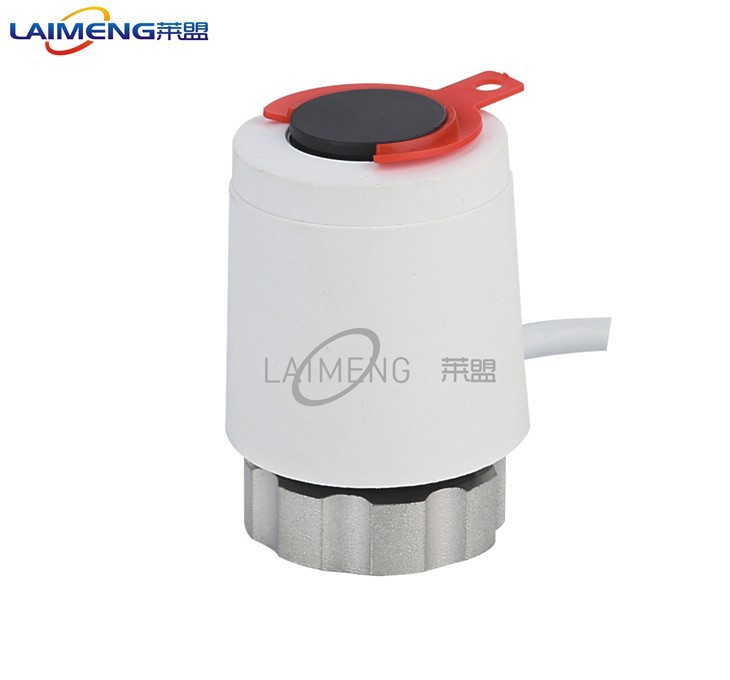
As a supplier of electro - thermal actuators, we have developed several solutions to address the challenges of underwater applications. We offer a range of Underfloor Heating Actuator that are designed with high - quality waterproof encapsulation. Our encapsulation materials are not only waterproof but also resistant to the high pressures and corrosive effects of underwater environments.
We also provide Thermal Actuator with enhanced insulation to reduce heat loss underwater. By optimizing the design of the actuator and using advanced insulation materials, we can ensure that the actuator reaches and maintains the required operating temperature even in a high - heat - transfer environment.
In addition, our Thermal - Electric Actuator Water Manifold is made of corrosion - resistant materials and is coated with a protective layer to prevent corrosion. We have conducted extensive testing in saltwater environments to ensure the long - term reliability of our products.
Conclusion
In conclusion, while there are challenges associated with using electro - thermal actuators in underwater applications, with proper design and engineering, these challenges can be overcome. The potential applications of electro - thermal actuators in underwater environments are vast, ranging from underwater robotics to oceanographic research and the oil and gas industry.
If you are interested in using electro - thermal actuators for your underwater applications, we would be delighted to discuss your specific requirements. Our team of experts can provide you with customized solutions and technical support to ensure the success of your project. Contact us today to start the procurement and negotiation process.
References
- Beeby, S. P., Tudor, M. J., & White, N. M. (2004). Energy harvesting vibration sources for microsystems applications. Measurement science and technology, 17(12), R175 - R195.
- Cui, X., & Zhang, Y. (2010). A review of electro - thermal micro - actuators and applications. Microsystem technologies, 16(10), 1837 - 1854.
- Xie, H., & Yang, G. (2012). Design and analysis of a shape - memory - alloy - based electro - thermal micro - actuator. Journal of Micromechanics and Microengineering, 22(7), 075012.