




In-Depth Analysis of the Manifold Industry: Core Components, Selection Guide, and Market Trends
 Nov 08, 2025|
In-Depth Analysis of the Manifold Industry: Core Components, Selection Guide, and Market Trends
Within complex fluid delivery systems-whether for home heating, building plumbing, or industrial piping networks-there exists a seemingly simple yet critically important "traffic hub": the manifold. It determines the rational distribution of flow, the balance and stability of the system, and the level of energy efficiency. This article delves into the world of manifolds, providing you with a professional industry guide.
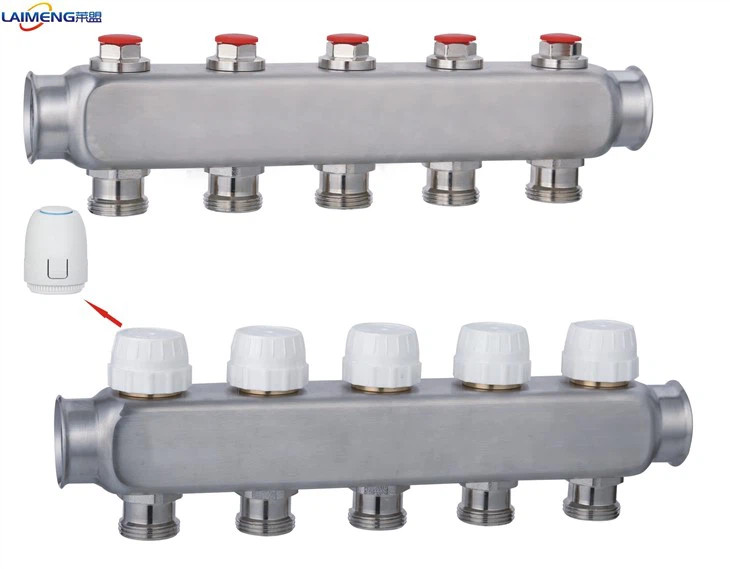
I. What Is a Manifold? More Than Just "Flow Distribution"
A manifold, also known as a distribution manifold, is a pressure-distribution device composed of supply and return pipes. Its core functions can be summarized as two key aspects:
Distribution: Evenly allocates source fluid (typically water or water-based solutions) from the main pipeline to multiple branch systems.
Collection: Gathering return fluids from each branch and consolidating them back into the main pipeline.
Thus, it transcends being a mere pipe connector, serving as a critical node for system regulation, inspection, and maintenance.
II. Core Application Scenarios and Product Classification
Based on application domains, manifolds are primarily categorized as follows:
1. Floor Heating System Manifolds
The most common household manifold, serving as the "heart" of underfloor heating systems. It regulates flow rates in each branch to control room temperatures, delivering comfort and energy efficiency. Typically equipped with:
Flow Control Valves: Manually or automatically adjust flow in each loop.
Air Vents: Release trapped air to prevent air locks.
Drain Valves: Facilitate system flushing and maintenance.
2. Building Plumbing Manifolds
In modern home renovations, manifolds are used in central water supply systems to enable "parallel piping." Their advantages include:
Independent Control: Each water point can be turned on/off independently without affecting others.
Reduced Leak Risk: All connections are centralized at the manifold, eliminating hazards from traditional PPR pipe "bridge bends."
Serviceability: Maintenance on a single branch requires shutting off only that branch, not the entire household water supply.
3. Industrial and Agricultural Irrigation Manifolds
Used in large HVAC systems, production line cooling, or agricultural irrigation. These manifolds feature:
Large Diameter, High Pressure Rating: Designed for high flow rates and operating pressures.
Special Materials: Typically stainless steel or carbon steel for superior corrosion and pressure resistance.
Customizable: Non-standard designs tailored to on-site piping layouts.
III. Key Performance Parameters and Selection Criteria for Manifolds
1. Main Body Material
Brass: Mainstream choice offering corrosion resistance, good mechanical properties, and strong workability. Note the distinction between standard brass and premium low-lead or antimicrobial brass.
Stainless Steel: Exceptional corrosion resistance, particularly suitable for poor water quality or industrial environments, though higher cost.
PPR/Plastic: Low cost and corrosion-resistant, but with limited pressure and temperature tolerance, primarily used in low-end water supply systems.
2. Working Pressure and Temperature
Clearly define the system's maximum design working pressure (e.g., PN10: 1.0MPa; PN16: 1.6MPa) and maximum working temperature (e.g., 90°C). The rated values of the selected manifold must exceed the system's actual requirements with a safety margin.
3. Diameter and Number of Branches
The main channel diameter (e.g., DN25, DN32) must match the main pipeline.
The branch diameter and quantity (commonly 4-12 branches) should be determined based on the number of loops and flow rate in the system design.
4. Valves and Actuators
Manual Valves: Basic configuration, relying on manual adjustment.
Electric Actuators: Can connect to thermostats to achieve automatic opening/closing of branches and flow regulation, serving as the foundation for intelligent control.
5. Certifications and Standards
Professional purchasers should verify whether products have obtained relevant international or national certifications, such as CE (EU), UL (US), and ISO9001 Quality Management System. These certifications are crucial guarantees for product quality and safety.
IV. Industry Trends and High-End Product Features
1. Intelligence and IoT Integration
Smart manifold distributors are gaining market traction. Integrating temperature sensors, flow meters, and electric valves, they enable remote monitoring and programmed control via mobile apps or central controllers. This facilitates room-by-room and time-based temperature control, delivering significant energy savings.
2. Energy Efficiency and System Balancing
Technological products like dynamic differential pressure balancing manifolds and preset manifolds automatically adapt to system pressure fluctuations. They ensure each branch receives the designed flow rate, preventing hydraulic imbalance and thereby enhancing the overall system's energy efficiency ratio.
3. Modularization and Customization
To meet the unique requirements of different projects, the concept of modular design is widely adopted. Manufacturers can offer flexible component combinations, enabling rapid response to customers' non-standard customization needs.
V. Professional Procurement and Selection Recommendations
For contractors, distributors, and procurement managers, key considerations when selecting manifold suppliers include:
Technical Support Capabilities: Does the supplier provide complete CAD drawings, technical specification sheets, and installation manuals?
Quality Control System: Do they maintain rigorous production processes and internal standards? Can they provide material inspection reports?
Customization Services: Can they flexibly tailor materials, pipe diameters, branch counts, and aesthetics to project requirements?
Brand Reputation: Historical case studies and user feedback within the industry serve as compelling evidence of product quality and service excellence.

Conclusion
Hidden within ceilings, pipe shafts, or equipment rooms, the manifold's technical sophistication and quality directly determine the stability, energy efficiency, and lifespan of the entire fluid system. In today's era emphasizing green buildings and smart homes, selecting a technologically advanced, reliable manifold is no longer a simple component purchase-it represents a critical investment in the system's long-term value. Understanding the underlying industry knowledge is the first step toward making an informed decision.