




What is the production process of a brass manifold?
 Dec 02, 2025|
 As a seasoned supplier of brass manifolds, I'm excited to take you through the intricate production process of these essential components. Brass manifolds are widely used in various industries, including plumbing, heating, and fluid control systems, due to their excellent corrosion resistance, durability, and malleability. In this blog post, I'll share the step-by-step journey of how a brass manifold is made, from raw materials to the finished product.
Step 1: Material Selection
The first step in the production of a brass manifold is selecting the right raw materials. Brass is an alloy composed primarily of copper and zinc, with varying proportions of other elements such as lead, tin, and aluminum to enhance specific properties. For high-quality brass manifolds, we typically use a brass alloy with a high copper content, which provides excellent corrosion resistance and mechanical strength.
The raw materials are sourced from reputable suppliers and undergo strict quality control checks to ensure they meet our specifications. The brass is usually supplied in the form of bars or billets, which are then cut into appropriate lengths for further processing.
Step 2: Machining
Once the raw materials are selected, the next step is machining. Machining involves shaping the brass billets into the desired manifold design using various cutting tools and machines. The machining process typically includes the following operations:
- Turning: Turning is a machining process that involves rotating the brass billet on a lathe while a cutting tool removes material to create the outer diameter and shape of the manifold. This process is used to create the basic cylindrical shape of the manifold and to machine any external threads or features.
- Milling: Milling is a machining process that involves using a rotating cutting tool to remove material from the brass billet to create flat surfaces, grooves, and holes. Milling is used to create the internal passages and ports of the manifold, as well as any external features such as mounting flanges or bosses.
- Drilling: Drilling is a machining process that involves using a drill bit to create holes in the brass billet. Drilling is used to create the inlet and outlet ports of the manifold, as well as any other holes required for mounting or fluid flow.
The machining process is carefully controlled to ensure the accuracy and precision of the manifold dimensions. Computer Numerical Control (CNC) machines are often used to automate the machining process and ensure consistent quality.
Step 3: Heat Treatment
After machining, the brass manifold may undergo heat treatment to improve its mechanical properties. Heat treatment involves heating the manifold to a specific temperature and then cooling it at a controlled rate to change its microstructure. The most common heat treatment process for brass manifolds is annealing, which involves heating the manifold to a temperature between 500°C and 700°C and then cooling it slowly in a furnace.
Annealing helps to relieve internal stresses in the brass, improve its ductility, and reduce its hardness. This makes the manifold easier to machine and assemble, and also improves its resistance to cracking and corrosion.
Step 4: Surface Finishing
Once the machining and heat treatment processes are complete, the brass manifold undergoes surface finishing to improve its appearance and corrosion resistance. Surface finishing typically involves the following operations:
- Polishing: Polishing is a process that involves using abrasive materials to smooth the surface of the manifold and remove any scratches or burrs. Polishing can be done by hand or using a polishing machine, and it helps to improve the manifold's appearance and make it easier to clean.
- Plating: Plating is a process that involves depositing a thin layer of metal onto the surface of the manifold to improve its corrosion resistance and appearance. The most common plating materials for brass manifolds are nickel and chrome, which provide excellent corrosion resistance and a shiny, attractive finish.
- Passivation: Passivation is a process that involves treating the brass manifold with a chemical solution to remove any free iron or other contaminants from the surface and to form a protective oxide layer. Passivation helps to improve the manifold's corrosion resistance and prevent the formation of rust or other corrosion products.
Step 5: Assembly
After surface finishing, the brass manifold is ready for assembly. Assembly involves attaching any additional components, such as valves, gauges, or fittings, to the manifold to create a complete system. The assembly process is carefully controlled to ensure the proper alignment and connection of all components, and to prevent any leaks or other issues.
Step 6: Quality Control
Before the brass manifold is shipped to the customer, it undergoes a rigorous quality control process to ensure it meets our high standards of quality and performance. Quality control typically involves the following tests and inspections:
- Dimensional Inspection: Dimensional inspection involves measuring the manifold's dimensions using precision measuring tools to ensure they meet the specified tolerances. This helps to ensure the manifold will fit properly into the system and function as intended.
- Pressure Testing: Pressure testing involves subjecting the manifold to a specified pressure to ensure it can withstand the operating conditions without leaking or failing. Pressure testing is typically done using a hydraulic or pneumatic test rig, and the manifold is monitored for any signs of leakage or deformation.
- Visual Inspection: Visual inspection involves examining the manifold for any surface defects, such as scratches, cracks, or pits, that could affect its performance or appearance. Visual inspection is typically done using a magnifying glass or microscope, and any defective manifolds are rejected and reworked or scrapped.
Step 7: Packaging and Shipping
Once the brass manifold has passed all quality control tests and inspections, it is packaged and shipped to the customer. Packaging is designed to protect the manifold during transit and to ensure it arrives at the customer's site in good condition. The manifold is typically wrapped in protective packaging materials, such as foam or bubble wrap, and placed in a sturdy cardboard box or wooden crate.
Shipping is arranged through a reliable freight carrier, and the customer is provided with a tracking number so they can monitor the progress of their shipment. We also offer expedited shipping options for customers who need their manifolds quickly.
Conclusion
In conclusion, the production process of a brass manifold is a complex and precise operation that involves multiple steps, from material selection to packaging and shipping. At our company, we take great pride in our commitment to quality and excellence, and we use the latest technology and manufacturing processes to ensure our brass manifolds meet the highest standards of performance and reliability.
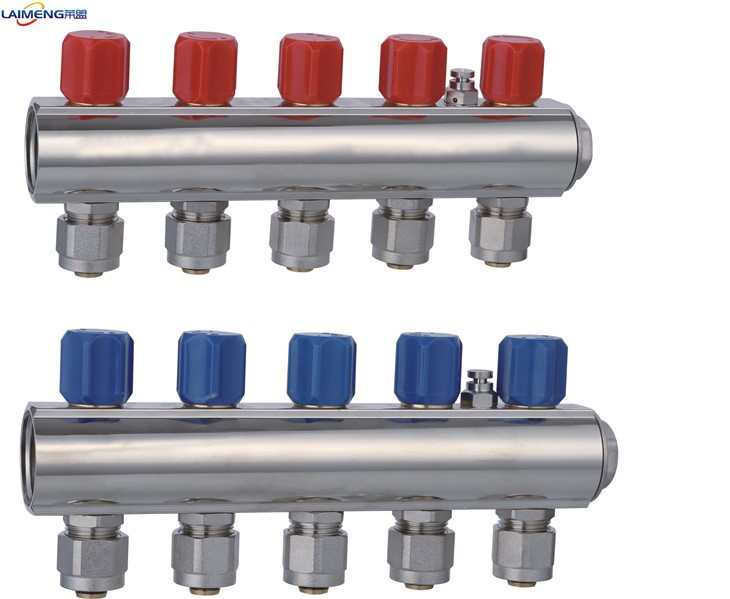

If you're in the market for high-quality brass manifolds, we invite you to explore our product range, including Brass Flow-meter Manifolds, Brass Manifold for Heating System, and Brass Radiant Heating Manifold. Our experienced team is ready to assist you with your specific requirements and provide you with the best solutions for your application. Contact us today to start a discussion about your procurement needs and let us help you find the perfect brass manifold for your project.
References
- ASM Handbook Committee. (2000). ASM Handbook, Volume 2: Properties and Selection: Nonferrous Alloys and Special-Purpose Materials. ASM International.
- Kalpakjian, S., & Schmid, S. R. (2009). Manufacturing Engineering and Technology (5th ed.). Pearson Prentice Hall.
- Metals Handbook Committee. (1990). Metals Handbook, Volume 6: Welding, Brazing, and Soldering. ASM International.