




What is the material composition of brass flow - meter manifolds?
 Jul 02, 2025|
 Hey there! I'm a supplier of Brass Flow - meter Manifolds, and today I wanna dive into the material composition of these nifty things. Brass flow - meter manifolds are pretty important in a bunch of industries, like plumbing, HVAC, and industrial fluid control. They help manage and measure the flow of fluids, and their material composition plays a huge role in how well they work.

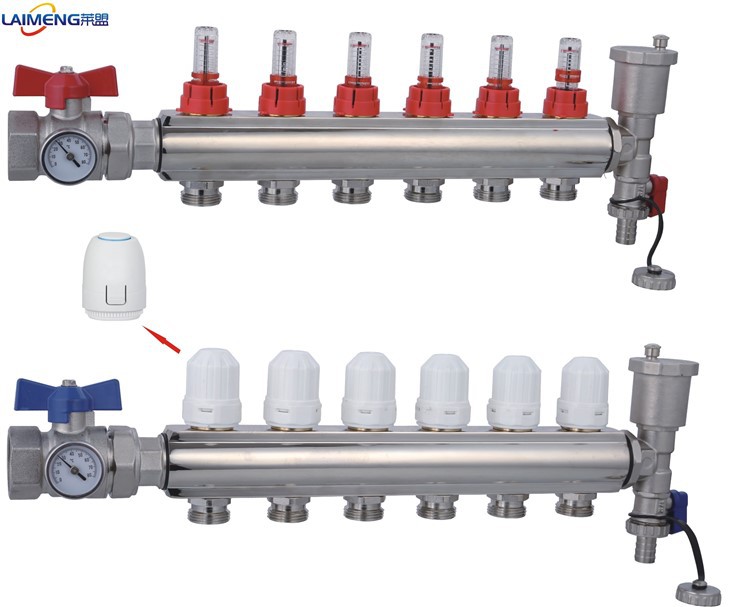
Let's start with the basics. Brass is an alloy, which means it's made up of two or more metals. The main ingredients in brass are copper and zinc. The ratio of copper to zinc can vary, and this variation has a big impact on the properties of the brass. Generally, brass has about 60 - 70% copper and 30 - 40% zinc.
Copper is the star player here. It's got some amazing properties. First off, it's highly resistant to corrosion. In a flow - meter manifold, this is super important because the manifold is constantly in contact with fluids, which could be water, chemicals, or other substances. If the manifold corrodes, it can lead to leaks, inaccurate flow measurements, and even system failures. Copper also has excellent thermal conductivity. This means that it can transfer heat well, which is useful in applications where temperature control is important, like in some HVAC systems.
Zinc, on the other hand, makes the brass stronger and more malleable. Malleability is a key property for making flow - meter manifolds. The manufacturing process often involves shaping the brass into complex designs with multiple ports and channels. Zinc helps the brass be easily formed into these shapes without cracking or breaking. It also increases the hardness of the brass, which makes the manifold more durable and able to withstand the pressure of the flowing fluids.
But that's not all. Sometimes, other elements are added to the brass to enhance specific properties. For example, lead is sometimes added in small amounts, usually less than 3%. Lead improves the machinability of the brass. Machinability refers to how easily a material can be cut, drilled, and shaped using machine tools. In the production of brass flow - meter manifolds, having good machinability is crucial because it allows for precise manufacturing of the manifold's internal passages and external connections. However, due to environmental and health concerns, the use of lead in brass has become more restricted in recent years.
Another element that might be added is tin. Tin can improve the corrosion resistance of the brass, especially in marine or other harsh environments. In a marine application, the brass flow - meter manifold could be exposed to saltwater, which is highly corrosive. Adding tin helps protect the manifold from the damaging effects of saltwater corrosion.
Now, let's talk about why understanding the material composition of brass flow - meter manifolds is so important for us as suppliers and for our customers. As a supplier, we need to ensure that the brass we use meets the required standards. Different applications have different requirements for the properties of the brass. For example, a plumbing application might require a brass with good general corrosion resistance, while an industrial chemical processing application might need a brass that can withstand highly corrosive chemicals.
For our customers, knowing the material composition helps them make informed decisions. They can choose the right type of brass flow - meter manifold for their specific needs. If they're working in a high - pressure environment, they'll want a brass with higher strength. If they're in a corrosive environment, they'll need a brass with better corrosion resistance.
At our company, we take great care in selecting the right brass for our Brass Flow - meter Manifolds. We work with high - quality brass suppliers and conduct strict quality control tests. We check the chemical composition of the brass to make sure it meets our specifications. We also test the mechanical properties, like hardness and strength, to ensure that the manifolds can perform well in different applications.
We offer a wide range of brass flow - meter manifolds, including Brass forged Manifolds and Brass Manifold With Flowmeter. Our forged manifolds are made using a forging process, which gives them even better strength and durability. The brass manifold with a flowmeter is a convenient solution for customers who need to measure the flow of fluids accurately.
If you're in the market for brass flow - meter manifolds, I encourage you to get in touch with us. We can provide you with detailed information about the material composition of our products, and help you choose the right manifold for your application. Whether you're a small plumbing contractor or a large industrial company, we've got the expertise and the products to meet your needs.
In conclusion, the material composition of brass flow - meter manifolds is a complex but important topic. It involves a careful balance of copper, zinc, and sometimes other elements to achieve the desired properties. By understanding this composition, both suppliers and customers can ensure that the manifolds perform well and last a long time. So, if you have any questions or are interested in purchasing our brass flow - meter manifolds, don't hesitate to reach out. We're here to help you make the best choice for your fluid management needs.
References
- "Metals Handbook: Properties and Selection: Nonferrous Alloys and Pure Metals", ASM International
- "Corrosion Resistance of Copper Alloys", Copper Development Association