




What is the flow uniformity of brass flow - meter manifolds?
 Dec 18, 2025|
 The concept of flow uniformity in brass flow - meter manifolds is a crucial aspect that significantly affects the performance and reliability of various systems in which these manifolds are employed. As a supplier of Brass Flow - meter Manifolds, I am well - versed in the intricacies of this topic and eager to share in - depth knowledge.
Understanding Brass Flow - meter Manifolds
Brass flow - meter manifolds serve as essential components in many fluid control and measurement systems. They are designed to distribute a fluid (such as water, gas, or oil) from a single source into multiple paths or to collect fluid from multiple sources into one outlet. The use of brass in these manifolds is due to its excellent durability, corrosion resistance, and relatively high strength. Brass manifolds can be found in diverse applications, including industrial processes, heating and cooling systems, and plumbing.
Brass Flow - meter Manifolds are often equipped with flow meters to measure the rate of fluid flow in each branch. This allows for better control and monitoring of the fluid distribution process, ensuring that the system operates efficiently and safely.
Defining Flow Uniformity
Flow uniformity refers to the degree to which the fluid flow rate is consistent across all the branches or outlets of a manifold. In an ideal situation, each branch of the manifold would receive an equal amount of fluid, resulting in perfect flow uniformity. However, in real - world applications, achieving this ideal state is often challenging due to several factors.
One of the key reasons for non - uniform flow is the pressure drop within the manifold. As the fluid travels through the manifold, it encounters resistance from the walls of the pipes and fittings. This resistance causes a pressure drop, which can vary depending on the length, diameter, and configuration of the hydraulic path. Branches closer to the fluid inlet may experience higher flow rates compared to those farther away, leading to uneven distribution.
Another factor influencing flow uniformity is the viscosity of the fluid. In fluids with high viscosity, such as heavy oils, the flow is more sluggish, and it is more difficult to achieve uniform distribution. Additionally, the presence of debris or contaminants in the fluid can cause blockages or disruptions in the flow, further affecting the uniformity.
Importance of Flow Uniformity
Achieving high flow uniformity in brass flow - meter manifolds is of utmost importance for several reasons. In industrial processes, accurate fluid distribution is critical for maintaining product quality and process efficiency. For example, in a chemical manufacturing plant, if the reactants are not evenly distributed through the manifold, the chemical reactions may not occur as intended, leading to inconsistent product quality and potentially wasted resources.
In heating and cooling systems, flow uniformity ensures that each area of the system receives an appropriate amount of heating or cooling medium. This leads to consistent temperature control, improved energy efficiency, and increased comfort for the occupants. Without proper flow uniformity, some areas may be over - heated or over - cooled, while others may not receive enough conditioning.
In addition to operational efficiency, flow uniformity also impacts the lifespan of the manifold and the associated components. Uneven flow can cause excessive wear and tear on specific parts of the manifold, leading to premature failures and increased maintenance costs.
Measuring Flow Uniformity
To assess the flow uniformity of a brass flow - meter manifold, several methods can be employed. One common approach is to use flow meters installed in each branch of the manifold to measure the flow rate. By comparing these readings, the degree of flow uniformity can be determined. A low standard deviation among the flow rates indicates high flow uniformity.
Another method is to use computational fluid dynamics (CFD) simulations. CFD software can model the fluid flow within the manifold, taking into account factors such as pressure drop, fluid viscosity, and manifold geometry. These simulations can provide detailed insights into the flow patterns and help identify areas where non - uniformities may occur.
Improving Flow Uniformity
There are several strategies that can be implemented to improve the flow uniformity of brass flow - meter manifolds. One effective way is to optimize the manifold design. This includes carefully selecting the pipe diameter, length, and fitting angles to minimize pressure drop and ensure smooth fluid flow. For example, using larger - diameter pipes can reduce the resistance and promote more even distribution.
Installing flow control valves in each branch is also a common practice. These valves can be adjusted to regulate the flow rate in each branch, compensating for any inherent non - uniformities in the manifold. Additionally, using flow straighteners or diffusers can help to disrupt any turbulent flow and promote more laminar, uniform flow.
Regular maintenance of the manifold is essential to ensure long - term flow uniformity. This includes cleaning the manifold to remove any debris or contaminants that may obstruct the flow, as well as checking and replacing any worn or damaged components.
Applications of Brass Flow - meter Manifolds with Good Flow Uniformity
Brass flow - meter manifolds with high flow uniformity find applications in a wide range of industries. In the Brass Manifold With Flowmeter category, these manifolds are used in water treatment plants to accurately distribute chemicals for purification processes. The uniform flow ensures that the chemicals are added in the correct proportions, leading to effective water treatment.

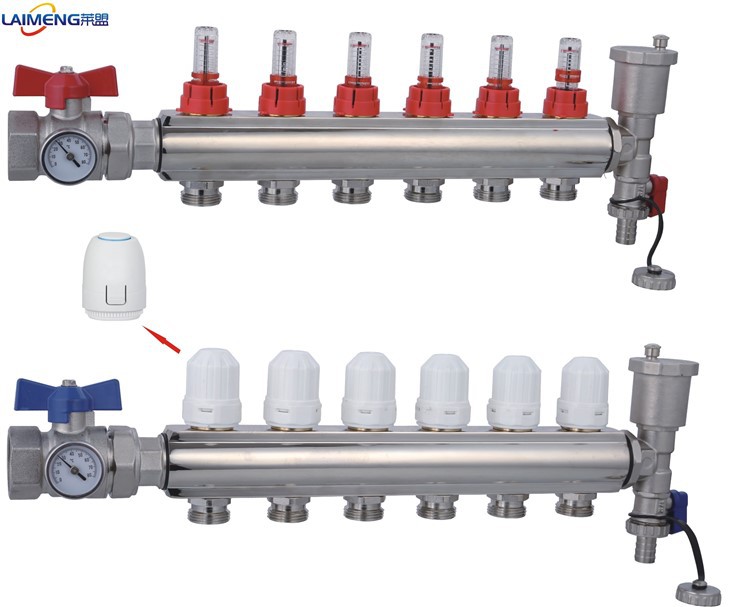
In Brass Manifold for Heating System, flow uniformity is essential for maintaining a consistent temperature throughout a building. These manifolds are designed to evenly distribute hot water or steam to different heating zones, ensuring comfort and energy efficiency.
Conclusion
In conclusion, understanding and achieving flow uniformity in brass flow - meter manifolds is vital for the proper functioning of numerous systems. As a supplier of these manifolds, we recognize the importance of providing high - quality products that offer excellent flow uniformity. Our expertise in manifold design and manufacturing allows us to create solutions that meet the diverse needs of our customers.
If you are in need of brass flow - meter manifolds with outstanding flow uniformity for your specific application, we invite you to contact us for procurement discussions. Our team is ready to provide you with detailed product information, technical support, and customized solutions. Let us work together to ensure the efficient and reliable operation of your fluid control and measurement systems.
References
- Munson, B. R., Young, D. F., & Okiishi, T. H. (2006). Fundamentals of Fluid Mechanics. John Wiley & Sons.
- White, F. M. (2003). Fluid Mechanics. McGraw - Hill Education.