




What are the wear - resistance properties of brass casting manifolds?
 Jun 09, 2025|
Wear-resistance is a crucial property for brass casting manifolds, especially in various industrial and commercial applications where these components are subject to continuous friction, abrasion, and mechanical stress. As a supplier of brass casting manifolds, understanding and highlighting the wear-resistance properties of our products is essential for meeting the needs of our customers and ensuring the long - term performance of their systems.
Composition and Microstructure of Brass Casting Manifolds
Brass is an alloy primarily composed of copper and zinc. The exact composition can vary, and other elements such as lead, tin, or aluminum may be added in small amounts to enhance specific properties. For wear - resistance, the ratio of copper to zinc plays a significant role. Generally, brass with a higher copper content tends to have better corrosion resistance and ductility, which can contribute to wear - resistance in some applications.

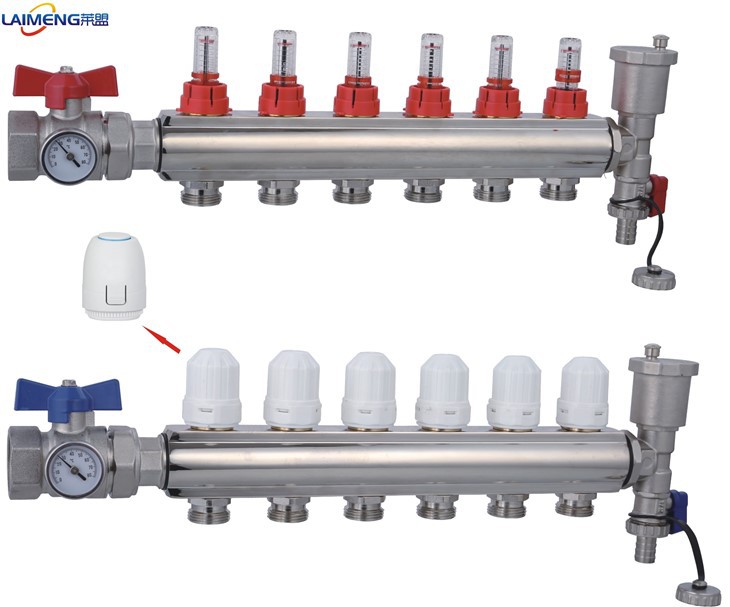
The microstructure of brass casting manifolds also affects their wear - resistance. During the casting process, the formation of a fine - grained structure can improve the mechanical properties of the brass. A fine - grained microstructure provides more grain boundaries, which act as barriers to the movement of dislocations. Dislocations are defects in the crystal lattice of the metal that can cause deformation under stress. By impeding the movement of dislocations, a fine - grained structure can increase the hardness and strength of the brass, thereby enhancing its wear - resistance.
Wear Mechanisms in Brass Casting Manifolds
There are several wear mechanisms that brass casting manifolds may encounter in service. These include adhesive wear, abrasive wear, and erosive wear.
Adhesive Wear
Adhesive wear occurs when two surfaces in contact slide against each other, and material is transferred from one surface to the other. In the case of brass casting manifolds, this can happen when they are in contact with other metal components, such as valves or pipes. The strength of the adhesive bond between the two surfaces and the hardness of the materials involved determine the extent of adhesive wear. To reduce adhesive wear, the surface finish of the brass casting manifolds can be optimized. A smoother surface reduces the contact area between the two surfaces, minimizing the chances of material transfer.
Abrasive Wear
Abrasive wear is caused by the presence of hard particles between two sliding surfaces. These particles can be dirt, sand, or other debris that enter the system. In industrial applications, abrasive wear is a common problem, especially in environments where the brass casting manifolds are exposed to dusty or dirty conditions. The hardness of the abrasive particles and the relative hardness of the brass surface are important factors in determining the rate of abrasive wear. Brass with a higher hardness is more resistant to abrasive wear. Heat treatment processes can be used to increase the hardness of the brass, but this must be carefully controlled to avoid affecting other important properties such as ductility.
Erosive Wear
Erosive wear occurs when a fluid containing solid particles impinges on the surface of the brass casting manifold. This is common in applications such as hydraulic systems or pipelines where the fluid flow may carry abrasive particles. The velocity of the fluid, the size and shape of the abrasive particles, and the angle of impingement all affect the rate of erosive wear. To improve the erosive wear resistance of brass casting manifolds, special coatings or surface treatments can be applied. For example, a hard - chrome plating can provide a protective layer on the surface of the brass, reducing the impact of the abrasive particles.
Factors Affecting Wear - Resistance
In addition to the composition, microstructure, and wear mechanisms, several other factors can affect the wear - resistance of brass casting manifolds.
Operating Conditions
The operating conditions of the brass casting manifolds have a significant impact on their wear - resistance. Temperature, pressure, and the nature of the fluid or gas flowing through the manifold can all affect the wear rate. High temperatures can reduce the hardness of the brass, making it more susceptible to wear. Similarly, high pressures can increase the contact stress between the surfaces, leading to more severe wear. The chemical composition of the fluid or gas can also cause corrosion, which can further accelerate wear.
Lubrication
Lubrication is an important factor in reducing wear in brass casting manifolds. A proper lubricant can form a thin film between the sliding surfaces, reducing friction and preventing direct contact between the surfaces. This can significantly reduce adhesive and abrasive wear. However, the choice of lubricant must be compatible with the brass material and the operating conditions. For example, in some applications where the manifold is exposed to high temperatures or harsh chemicals, a synthetic lubricant may be required.
Design and Geometry
The design and geometry of the brass casting manifolds can also affect their wear - resistance. Sharp edges and corners can create stress concentrations, which can lead to premature wear. A well - designed manifold with smooth curves and proper transitions can distribute the stress more evenly, reducing the wear rate. Additionally, the internal flow path of the manifold should be designed to minimize turbulence and the impact of the fluid on the walls of the manifold, which can reduce erosive wear.
Applications and the Importance of Wear - Resistance
Brass casting manifolds are used in a wide range of applications, including plumbing, heating, ventilation, and air - conditioning (HVAC), and industrial fluid handling systems. In each of these applications, wear - resistance is of utmost importance.
In plumbing systems, brass casting manifolds are used to distribute water to different fixtures. The constant flow of water and the presence of minerals and other impurities in the water can cause wear over time. A wear - resistant brass manifold can ensure a long - lasting and reliable plumbing system. For example, a Brass Manifold With Flowmeter used in a plumbing system needs to maintain its accuracy and performance over an extended period, which requires good wear - resistance.
In HVAC systems, brass casting manifolds are used to control the flow of refrigerant or hot and cold water. The high - pressure and high - temperature conditions in these systems can cause significant wear on the manifolds. A wear - resistant manifold can ensure the efficient operation of the HVAC system and reduce the need for frequent maintenance. Brass Flow - meter Manifolds in HVAC systems need to accurately measure the flow rate of the fluid, and wear - resistance is crucial for maintaining this accuracy.
In industrial fluid handling systems, brass casting manifolds are used to transport various fluids, including chemicals, oils, and gases. These fluids can be abrasive or corrosive, and the manifolds need to be able to withstand the harsh conditions. A wear - resistant brass manifold can prevent leaks and ensure the safe and efficient operation of the industrial process. Brass Radiant Heating Manifold in industrial heating applications need to have good wear - resistance to ensure the long - term performance of the heating system.
Conclusion
As a supplier of brass casting manifolds, we understand the importance of wear - resistance in ensuring the performance and reliability of our products. By carefully controlling the composition, microstructure, and surface finish of our brass casting manifolds, and by considering the operating conditions and design factors, we can provide high - quality manifolds with excellent wear - resistance.
If you are in the market for brass casting manifolds and are looking for products with superior wear - resistance, we invite you to contact us for a detailed discussion about your specific requirements. Our team of experts is ready to assist you in selecting the right manifold for your application and can provide you with all the necessary technical information and support.
References
- ASM Handbook, Volume 1: Properties and Selection: Irons, Steels, and High - Performance Alloys
- Metals Handbook Desk Edition, Third Edition
- Tribology Handbook, Edited by B. Bhushan