




How to reduce the pressure drop in a brass manifold?
 Dec 02, 2025|
 As a supplier of brass manifolds, I've witnessed firsthand the challenges that customers face when dealing with high pressure drops in these systems. Pressure drop can lead to inefficiencies, increased energy consumption, and potential damage to the overall piping network. In this blog post, I'll share some effective strategies to reduce the pressure drop in a brass manifold, ensuring optimal performance and longevity of your system.
Understanding Pressure Drop in Brass Manifolds
Before delving into the solutions, it's crucial to understand what causes pressure drop in brass manifolds. Pressure drop occurs when there is a loss of pressure as fluid flows through a pipe or a manifold. This loss is primarily due to friction between the fluid and the inner surface of the pipe, as well as changes in the flow direction and velocity. In a brass manifold, factors such as the diameter of the manifold, the number of branches, the roughness of the inner surface, and the flow rate of the fluid can all contribute to the pressure drop.
Selecting the Right Manifold Design
One of the most effective ways to reduce pressure drop is to select the right manifold design. A well-designed manifold can minimize the number of bends and sudden changes in flow direction, which are major contributors to pressure loss. For instance, a straight-through manifold design is generally more efficient than a manifold with multiple elbows and tees. Additionally, the diameter of the manifold should be carefully chosen based on the flow rate requirements. A larger diameter manifold can reduce the velocity of the fluid, thereby reducing friction and pressure drop.
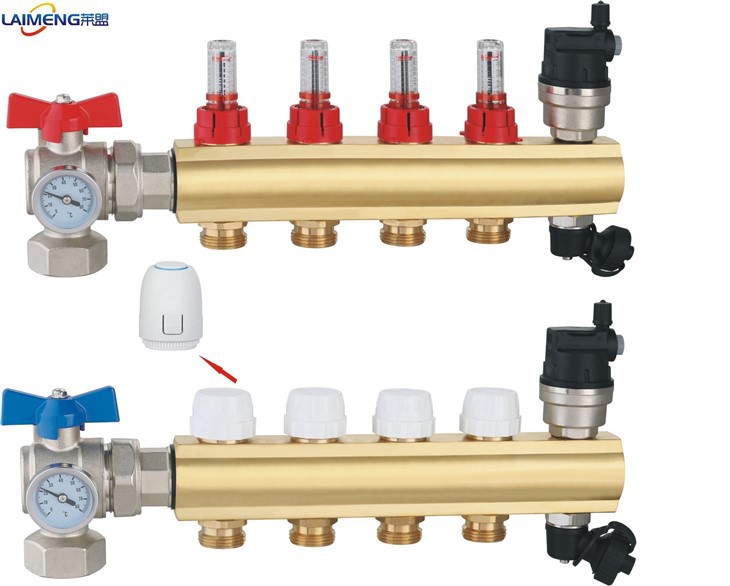
When selecting a brass manifold, consider our Brass Flow-meter Manifolds. These manifolds are designed with precision to ensure smooth fluid flow and minimal pressure drop. They are also equipped with flow meters, allowing you to accurately monitor the flow rate and make adjustments as needed.
Optimizing the Inner Surface of the Manifold
The roughness of the inner surface of the brass manifold can significantly affect the pressure drop. A smooth inner surface reduces friction between the fluid and the pipe wall, resulting in lower pressure loss. To achieve a smooth inner surface, we use advanced manufacturing techniques during the production of our brass manifolds. These techniques ensure that the inner surface is free from defects and has a low roughness value.
In addition to the manufacturing process, proper cleaning and maintenance of the manifold can also help maintain a smooth inner surface. Regularly flushing the manifold with clean water can remove any debris or sediment that may accumulate over time, preventing blockages and reducing pressure drop.
Managing the Flow Rate
Controlling the flow rate of the fluid through the brass manifold is another important factor in reducing pressure drop. Excessive flow rates can increase the velocity of the fluid, leading to higher friction and pressure loss. On the other hand, a too low flow rate may not be sufficient to meet the system's requirements. Therefore, it's essential to find the optimal flow rate for your specific application.
Our Brass Manifold With Flowmeter provides a convenient way to monitor and control the flow rate. The integrated flow meter allows you to accurately measure the flow rate and make adjustments to ensure that it remains within the optimal range. By maintaining a consistent and appropriate flow rate, you can minimize pressure drop and improve the overall efficiency of the system.
Reducing the Number of Branches
Each branch in a brass manifold adds additional resistance to the fluid flow, contributing to pressure drop. Therefore, it's advisable to minimize the number of branches as much as possible. When designing the system, carefully plan the layout to ensure that the number of connections is kept to a minimum. If multiple branches are necessary, consider using larger diameter pipes for the branches to reduce the velocity of the fluid and minimize pressure loss.
Our Brass Collectors Brass Water Manifold is an excellent option for applications where multiple connections are required. These manifolds are designed to collect and distribute water efficiently, with a focus on minimizing pressure drop. They feature a compact design and a smooth internal flow path, ensuring optimal performance even with multiple branches.
Proper Installation and Maintenance
Proper installation and maintenance of the brass manifold are crucial for reducing pressure drop. During installation, ensure that the manifold is installed correctly, with no kinks or bends in the pipes. The connections should be tight and leak-free to prevent any loss of pressure. Additionally, the manifold should be supported properly to avoid any stress or strain on the pipes, which can lead to damage and increased pressure drop.
Regular maintenance of the brass manifold is also essential. This includes checking for leaks, inspecting the inner surface for corrosion or damage, and cleaning the manifold as needed. By performing routine maintenance, you can identify and address any issues early on, preventing them from escalating and causing significant pressure drop.

Conclusion
Reducing the pressure drop in a brass manifold is essential for ensuring the efficient operation of your piping system. By selecting the right manifold design, optimizing the inner surface, managing the flow rate, reducing the number of branches, and performing proper installation and maintenance, you can significantly minimize pressure loss and improve the overall performance of your system.
As a leading supplier of brass manifolds, we are committed to providing high-quality products and solutions to our customers. Our Brass Flow-meter Manifolds, Brass Collectors Brass Water Manifold, and Brass Manifold With Flowmeter are designed to meet the diverse needs of our customers and help them achieve optimal performance in their applications.
If you're interested in learning more about our brass manifolds or have any questions regarding pressure drop reduction, please don't hesitate to contact us. We look forward to discussing your requirements and finding the best solutions for your project.
References
- Moody, L. F. (1944). "Friction factors for pipe flow". Transactions of the ASME, 66(8), 671 - 684.
- Incropera, F. P., & DeWitt, D. P. (2002). Fundamentals of heat and mass transfer. John Wiley & Sons.
- Streeter, V. L., & Wylie, E. B. (1981). Fluid mechanics. McGraw - Hill.