




How does the thickness of a brass filter affect its function?
 Nov 03, 2025|
As a seasoned supplier of brass filters, I've witnessed firsthand the pivotal role that filter thickness plays in determining its overall function. In this blog post, I'll delve into the intricate relationship between the thickness of a brass filter and its performance, exploring how different thicknesses can impact filtration efficiency, durability, and more.
Filtration Efficiency
One of the primary functions of a brass filter is to remove impurities and contaminants from a fluid or gas stream. The thickness of the filter can significantly influence its ability to achieve this. A thicker brass filter generally offers higher filtration efficiency. This is because a thicker filter provides more surface area and a greater number of pores or channels for the fluid or gas to pass through. As the fluid or gas navigates through the filter, the contaminants are more likely to be trapped within the filter matrix.
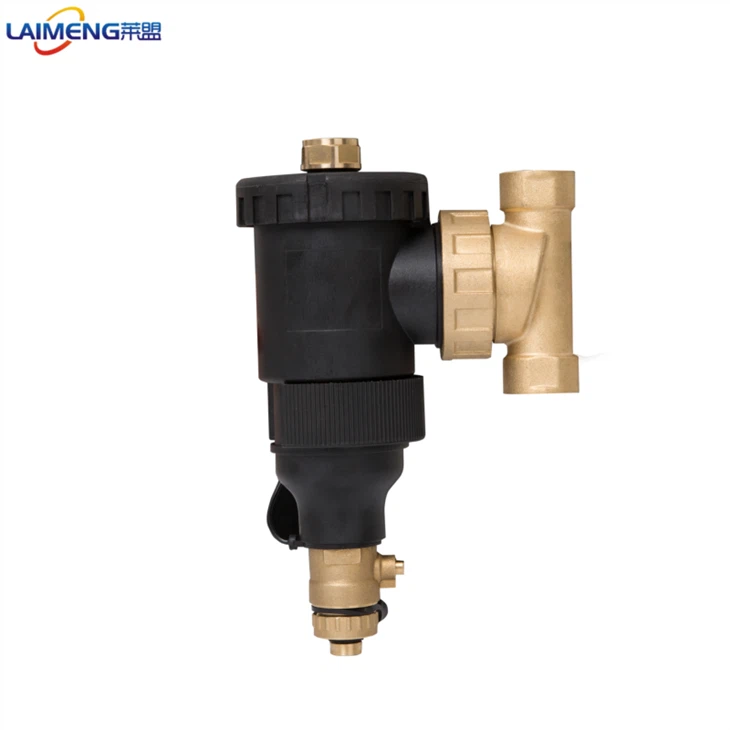

For example, in applications where fine particles need to be removed, such as in a Boiler Magnetic Water Filter, a thicker filter can capture smaller particles more effectively. The increased thickness allows for a more tortuous path for the fluid, increasing the chances of particle - filter collisions and subsequent capture. On the other hand, a thinner filter may allow some of these fine particles to pass through, reducing the overall filtration efficiency.
However, it's important to note that there is a limit to how much increasing the thickness can improve filtration efficiency. At a certain point, the pressure drop across the filter may become too high, which can negatively impact the flow rate of the fluid or gas. This means that while a thicker filter can enhance filtration, it must be balanced with the system's ability to maintain an adequate flow.
Durability and Longevity
The thickness of a brass filter also has a direct impact on its durability and longevity. A thicker brass filter is generally more robust and can withstand higher pressures and mechanical stresses. In industrial applications where the filter is exposed to harsh conditions, such as high - flow rates, abrasive particles, or corrosive substances, a thicker filter is less likely to deform or break.
For instance, in a Household Backwash Brass Sediment Pre Filter Water, which is constantly exposed to water flow and sediment, a thicker filter can resist wear and tear better. The extra material provides more structural integrity, ensuring that the filter can continue to function effectively over an extended period. Thinner filters, in contrast, may be more prone to damage, requiring more frequent replacement.
Moreover, a thicker brass filter is often more resistant to corrosion. Brass is already a relatively corrosion - resistant material, but a thicker layer of brass provides an additional barrier against corrosive agents. This is particularly important in applications where the filter comes into contact with water or chemicals that could potentially corrode the metal.
Pressure Drop
Pressure drop is a crucial factor to consider when evaluating the function of a brass filter. As the fluid or gas passes through the filter, it encounters resistance, which results in a decrease in pressure. The thickness of the filter has a significant influence on the pressure drop.
A thicker brass filter typically causes a higher pressure drop. This is because the fluid or gas has to travel through a greater amount of material, encountering more resistance along the way. In some systems, a high pressure drop can be a problem. For example, in a water supply system, a large pressure drop across the filter can reduce the water flow rate to the point where it affects the performance of appliances or fixtures.
To mitigate the issue of high pressure drop, it's important to select the appropriate filter thickness based on the specific requirements of the system. In some cases, it may be necessary to use a thicker filter in combination with a pump or other pressure - boosting device to maintain an adequate flow rate.
Flow Rate
The flow rate of a fluid or gas through a brass filter is closely related to the pressure drop and the filter thickness. As mentioned earlier, a thicker filter generally leads to a higher pressure drop, which can reduce the flow rate. However, the relationship between filter thickness and flow rate is not always straightforward.
The design and porosity of the filter also play a role. A well - designed thicker filter with optimized pore size and distribution can maintain a relatively high flow rate while still providing good filtration efficiency. In addition, the viscosity of the fluid or gas being filtered can affect the flow rate. For example, a thicker filter may have a more significant impact on the flow rate of a viscous fluid compared to a less viscous one.
In applications where a high flow rate is essential, such as in large - scale industrial processes or high - volume water treatment plants, careful consideration must be given to the filter thickness. It may be necessary to conduct flow rate tests and simulations to determine the optimal filter thickness that can meet both the filtration and flow rate requirements.
Impact on Different Types of Brass Filters
The effect of filter thickness can vary depending on the type of brass filter. For example, in a Magnetic Central Water Heating Filter Magnetic Filter Separators, the thickness can influence both the magnetic separation efficiency and the overall durability. A thicker filter can provide more space for the magnetic elements, potentially enhancing the ability to attract and capture magnetic particles. At the same time, its increased durability ensures that the filter can withstand the high - temperature and high - pressure conditions often associated with central heating systems.
In a sediment filter, the thickness is crucial for capturing and retaining sediment particles. A thicker sediment filter can hold more sediment before it needs to be cleaned or replaced, which is beneficial for reducing maintenance requirements.
Conclusion
In conclusion, the thickness of a brass filter has a profound impact on its function. It affects filtration efficiency, durability, pressure drop, and flow rate, among other factors. As a supplier of brass filters, I understand the importance of selecting the right filter thickness for each specific application.
When choosing a brass filter, it's essential to consider the nature of the fluid or gas being filtered, the required filtration efficiency, the system's pressure and flow rate capabilities, and the expected operating conditions. By carefully evaluating these factors, we can provide our customers with the most suitable brass filters that meet their needs.
If you're in the market for high - quality brass filters and want to discuss your specific requirements, I invite you to reach out for a procurement negotiation. Our team of experts is ready to assist you in finding the perfect filter solution for your application.
References
- Smith, J. (2018). "Filtration Technology: Principles and Applications". Elsevier.
- Johnson, R. (2019). "Brass Alloys and Their Applications in Filtration Systems". Journal of Material Science and Engineering.
- Brown, A. (2020). "The Impact of Filter Thickness on Fluid Flow and Filtration Efficiency". International Journal of Filtration.