




How does the hardness of a brass filter affect its durability?
 Oct 15, 2025|
 Brass filters are widely used in various industries and applications due to their excellent corrosion resistance, malleability, and relatively low cost. One of the key factors that can significantly influence the performance and lifespan of a brass filter is its hardness. As a trusted brass filter supplier, I have witnessed firsthand how the hardness of these filters plays a crucial role in determining their durability. In this blog post, I will delve into the relationship between the hardness of a brass filter and its durability, exploring the scientific principles behind it and providing real - world examples.
Understanding Brass and Its Hardness
Brass is an alloy composed primarily of copper and zinc. The proportion of these two elements can vary, along with the addition of other trace elements, which gives brass different properties, including hardness. Hardness is a measure of a material's resistance to deformation, indentation, or scratching. In the case of brass filters, hardness can be influenced by factors such as the composition of the alloy, the manufacturing process, and any post - manufacturing treatments.
There are several methods to measure the hardness of brass, such as the Brinell hardness test, the Rockwell hardness test, and the Vickers hardness test. Each method has its own advantages and is suitable for different types of brass products. For brass filters, the Rockwell hardness test is often used because it is relatively quick and can provide reliable results for materials of various thicknesses.
The Impact of Hardness on Durability
Wear Resistance
One of the most significant ways in which the hardness of a brass filter affects its durability is through wear resistance. In many applications, brass filters are exposed to abrasive particles in the fluid they are filtering. For example, in a Household Backwash Brass Sediment Pre Filter Water, the filter has to deal with sediment and sand particles in the water. A harder brass filter will be more resistant to the abrasive action of these particles.
When a soft brass filter is exposed to abrasive materials, the surface of the filter can be easily scratched and worn away. This can lead to the formation of holes or gaps in the filter, reducing its effectiveness in removing contaminants. On the other hand, a harder brass filter can withstand the abrasive forces for a longer period, maintaining its structural integrity and filtration efficiency.
Corrosion Resistance
Hardness can also have an impact on the corrosion resistance of a brass filter. While brass is generally known for its good corrosion resistance, the surface hardness can play a role in how well it resists corrosion. A harder brass surface is less likely to have micro - defects and pores, which can act as sites for corrosion initiation.
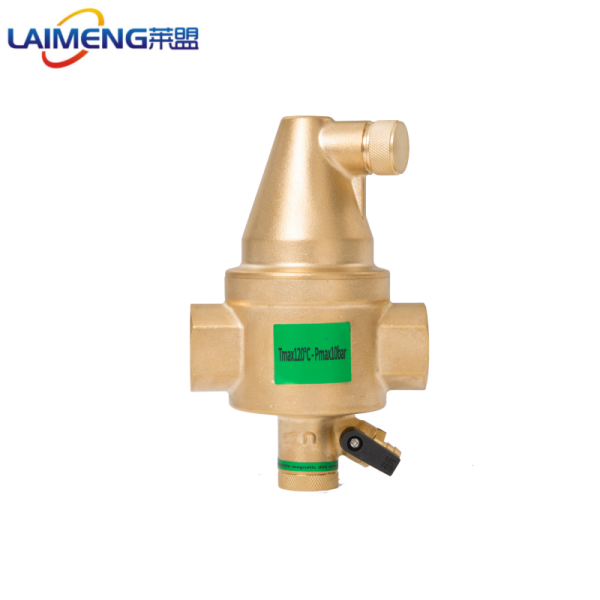
In some industrial applications, brass filters may be exposed to corrosive chemicals or high - humidity environments. For instance, a Boiler Magnetic Water Filter in a power plant may be exposed to water containing dissolved salts and oxygen, which can cause corrosion. A harder brass filter will have a more compact and dense surface structure, which can act as a better barrier against corrosive agents. This can significantly extend the lifespan of the filter, reducing the frequency of replacement and maintenance costs.
Structural Integrity under Pressure
Brass filters are often used in systems where they are subjected to pressure. The hardness of the brass affects the filter's ability to maintain its structural integrity under these pressure conditions. A softer brass filter may deform or bulge when exposed to high pressure, which can lead to leaks or a decrease in filtration performance.
For example, in a Water Prefilter System Sediment Cleaning Stainless Steel Mesh Brass Water Filter, the filter needs to be able to withstand the pressure of the incoming water. A harder brass filter can better resist the forces exerted by the water pressure, ensuring that it remains in its original shape and functions properly. This is particularly important in applications where a consistent flow rate and filtration efficiency are required.

Controlling the Hardness of Brass Filters
As a brass filter supplier, we have several methods to control the hardness of our products. One of the most common ways is through the selection of the appropriate brass alloy. Different brass alloys have different hardness levels, and by choosing the right alloy, we can tailor the hardness of the filter to meet the specific requirements of the application.
The manufacturing process also plays a crucial role in determining the hardness of the brass filter. Processes such as cold working can increase the hardness of brass. Cold working involves deforming the brass at room temperature, which causes the grains in the metal to become more tightly packed, increasing the hardness. Heat treatment is another method that can be used to adjust the hardness of brass. By heating the brass to a specific temperature and then cooling it at a controlled rate, we can change its microstructure and hardness.
Real - World Examples
In the household water filtration industry, we have seen that filters with a higher hardness tend to last longer. Customers who use our Household Backwash Brass Sediment Pre Filter Water have reported fewer issues with clogging and damage over time. The harder brass surface resists the wear from sediment particles in the water, maintaining the filter's performance for a longer period.
In the industrial sector, boilers are critical components, and the Boiler Magnetic Water Filter is an essential part of the boiler system. Harder brass filters in these applications have shown better resistance to corrosion and pressure, reducing the risk of system failures and costly repairs.
Conclusion
The hardness of a brass filter has a profound impact on its durability. Through its effects on wear resistance, corrosion resistance, and structural integrity under pressure, the hardness of the brass determines how long the filter can perform effectively in various applications. As a brass filter supplier, we are committed to providing high - quality filters with the appropriate hardness for each specific use case.
If you are in need of brass filters for your household or industrial applications, we would be more than happy to discuss your requirements. Our team of experts can help you select the right filter with the optimal hardness to ensure long - lasting performance and value. Contact us today to start a procurement discussion and find the perfect brass filter solution for you.
References
- ASM Handbook Committee. (2000). ASM Handbook Volume 2: Properties and Selection: Nonferrous Alloys and Special - Purpose Materials. ASM International.
- Callister, W. D., & Rethwisch, D. G. (2011). Materials Science and Engineering: An Introduction. Wiley.
- Davis, J. R. (Ed.). (1996). Copper and Copper Alloys. ASM International.