




How do radiant manifolds affect the humidity in a room?
 Aug 07, 2025|
Radiant manifolds are essential components in many modern heating and cooling systems. As a supplier of high - quality radiant manifolds, I've witnessed firsthand the impact these devices can have on various aspects of indoor environments, including humidity levels. In this blog, I'll explore how radiant manifolds affect the humidity in a room and why understanding this relationship is crucial for creating a comfortable and healthy living or working space.
The Basics of Radiant Manifolds
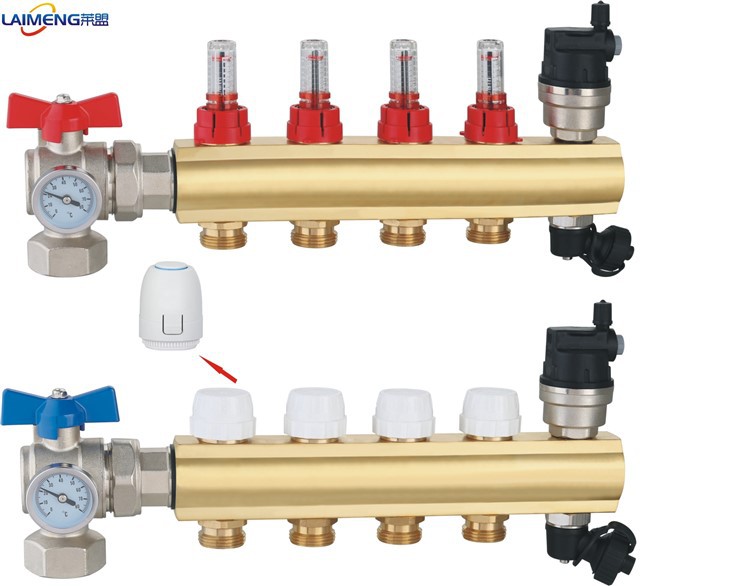
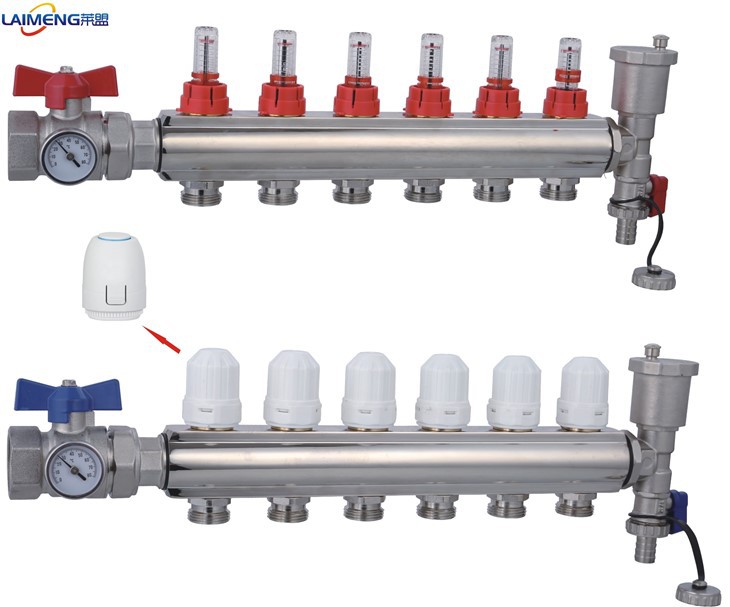
Before delving into the humidity aspect, let's briefly understand what radiant manifolds are. Radiant manifolds are distribution systems that divide a single supply line into multiple branches, allowing for the even distribution of a fluid (usually water) throughout a radiant heating or cooling system. They are typically made of materials like brass, which offers durability and corrosion resistance. Our company offers a range of brass - made manifolds, such as Brass Collectors Brass Water Manifold, Brass Flow - meter Manifolds, and Brass Manifold With Flowmeter. These manifolds play a key role in controlling the flow of water in radiant systems, which in turn affects the temperature and humidity in a room.
The Connection Between Radiant Heating/Cooling and Humidity
Humidity refers to the amount of water vapor present in the air. In a room, maintaining an appropriate humidity level is vital for comfort, health, and the preservation of furniture and other items. Radiant heating and cooling systems, through the operation of radiant manifolds, can have a significant impact on humidity in the following ways:
1. Temperature Regulation and Humidity
Radiant manifolds control the flow of hot or cold water through the radiant panels installed in the floor, ceiling, or walls of a room. When the system is used for heating, the warm water circulating through the panels raises the temperature of the room. As the air temperature increases, its capacity to hold water vapor also increases. This means that the relative humidity (the ratio of the actual amount of water vapor in the air to the maximum amount the air can hold at a given temperature) decreases.
Conversely, when the radiant system is used for cooling, the cold water in the panels lowers the room temperature. The air's capacity to hold water vapor decreases, and if the temperature drops below the dew point, water vapor will condense on the cold surfaces. This process effectively removes moisture from the air, reducing the humidity level in the room.
2. Air Circulation and Humidity
Radiant heating and cooling systems operate differently from forced - air systems. Forced - air systems rely on fans to blow air around the room, which can cause rapid changes in humidity due to the mixing of air from different sources. In contrast, radiant systems heat or cool the room through radiation, with minimal air movement. This gentle heating or cooling process helps to maintain a more stable humidity level.
The radiant manifolds ensure that the water flow is evenly distributed across the radiant panels. This uniform distribution of heat or cold helps to create a consistent temperature throughout the room, which in turn contributes to a more stable humidity environment. Uneven water flow, on the other hand, can lead to temperature variations in different parts of the room, causing local changes in humidity and potentially creating uncomfortable or unhealthy conditions.
3. Condensation and Humidity Control
In a radiant cooling system, condensation can be a concern. If the surface temperature of the radiant panels drops below the dew point of the air in the room, water will condense on the panels. This can lead to a decrease in the humidity level in the room, but it can also cause problems such as mold growth and damage to the panels and surrounding structures.
Radiant manifolds can be used to control the water flow and temperature in the panels to prevent excessive condensation. By adjusting the flow rate and temperature of the water, the surface temperature of the panels can be maintained above the dew point, ensuring that the humidity is controlled without the risk of condensation.
The Benefits of Controlling Humidity with Radiant Manifolds
Maintaining an optimal humidity level in a room has several benefits:
1. Comfort
A comfortable indoor environment typically has a relative humidity level between 30% and 60%. When the humidity is within this range, people feel more comfortable, as their skin and respiratory tracts are not overly dry or moist. Radiant manifolds help to achieve and maintain this ideal humidity level by precisely controlling the heating and cooling process in the room.
2. Health
Proper humidity control is essential for health. Low humidity can cause dry skin, irritated eyes, and respiratory problems, while high humidity can promote the growth of mold, dust mites, and other allergens. By regulating the humidity through the use of radiant manifolds, we can create a healthier indoor environment, reducing the risk of these health issues.
3. Preservation of Property
Humidity can also affect the lifespan and condition of furniture, electronics, and other items in a room. High humidity can cause wood to warp, metal to rust, and electronics to malfunction. Radiant manifolds help to keep the humidity at a stable level, protecting these valuable assets.
Challenges and Solutions in Humidity Control with Radiant Manifolds
While radiant manifolds offer many advantages in humidity control, there are also some challenges that need to be addressed:
1. Initial Design and Installation
Proper design and installation of the radiant system, including the selection and placement of radiant manifolds, are crucial for effective humidity control. Incorrect sizing or placement of the manifolds can lead to uneven water flow and temperature distribution, resulting in inconsistent humidity levels in the room.
To overcome this challenge, it is important to work with experienced professionals who can design and install the radiant system based on the specific requirements of the room, such as its size, insulation, and usage patterns.
2. Monitoring and Maintenance
Regular monitoring of the humidity level in the room and the performance of the radiant system is necessary to ensure optimal humidity control. This includes checking the water flow, temperature, and pressure in the radiant manifolds. Any issues, such as leaks or blockages, should be addressed promptly to prevent problems with humidity control.
We recommend installing humidity sensors in the room and using a building automation system to monitor and adjust the operation of the radiant system. This allows for real - time control and ensures that the humidity level remains within the desired range.
Conclusion
Radiant manifolds play a crucial role in controlling the humidity in a room. By regulating the flow of water in a radiant heating or cooling system, they can affect the temperature, air circulation, and condensation in the room, all of which have a direct impact on humidity. Understanding this relationship and taking appropriate measures to address the challenges associated with humidity control can help to create a comfortable, healthy, and sustainable indoor environment.
If you are interested in learning more about our radiant manifolds or are considering a radiant heating or cooling system for your project, we invite you to contact us for a consultation. Our team of experts is ready to provide you with detailed information and help you select the most suitable products for your needs.
References
ASHRAE Handbook - Fundamentals. American Society of Heating, Refrigerating and Air - Conditioning Engineers.
CIBSE Guide A: Environmental Design. Chartered Institution of Building Services Engineers.
Hens, H. (2007). Building Physics: Heat, Air and Moisture. Taylor & Francis.