




How do brass forged manifolds compare to plastic manifolds?
 Oct 31, 2025|
 In the realm of fluid management systems, the choice between brass forged manifolds and plastic manifolds is a critical decision that can significantly impact the performance, durability, and overall cost - effectiveness of a project. As a supplier of brass forged manifolds, I am well - versed in the characteristics of both materials and can offer a detailed comparison to help you make an informed choice.
Material Properties
Brass Forged Manifolds
Brass is an alloy primarily composed of copper and zinc, with trace amounts of other elements. The forging process involves shaping the brass under high pressure, which results in a dense and homogeneous structure. This gives brass forged manifolds several advantages. Firstly, brass has excellent corrosion resistance. It can withstand exposure to a wide range of chemicals and environmental conditions without significant degradation. For example, in heating systems where water may contain various minerals and additives, brass manifolds are less likely to corrode compared to other materials.
Secondly, brass has high mechanical strength. It can handle high - pressure applications without deformation or failure. This makes it suitable for industrial and commercial systems where reliable performance under stress is crucial. For instance, in hydraulic systems, brass forged manifolds can endure the intense pressure generated by pumps and valves, ensuring smooth and consistent fluid flow.
Plastic Manifolds
Plastic manifolds are typically made from materials such as polypropylene (PP), polyvinyl chloride (PVC), or acrylonitrile butadiene styrene (ABS). These materials are lightweight and easy to manufacture, which often translates into lower production costs. Plastic is also resistant to many chemicals, especially those that are non - polar. However, its corrosion resistance is limited compared to brass, especially when exposed to strong acids, alkalis, or solvents.
In terms of mechanical strength, plastic manifolds are generally not as robust as brass ones. They may deform or crack under high pressure or temperature fluctuations. For example, in a hot water distribution system, if the temperature exceeds the plastic's heat - resistance threshold, the manifold may warp, leading to leaks and system inefficiencies.
Manufacturing and Design Flexibility
Brass Forged Manifolds
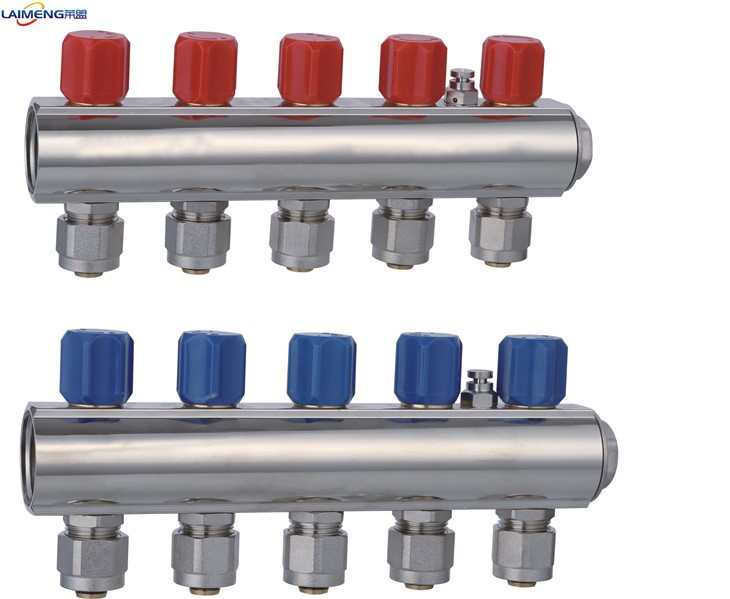
The forging process allows for the creation of complex shapes and precise dimensions. This means that brass forged manifolds can be customized to meet specific project requirements. Whether it's a unique configuration for a heating system or a specialized design for an industrial process, brass can be shaped to fit the exact needs. Additionally, the surface finish of forged brass manifolds is smooth and uniform, which reduces fluid friction and improves flow efficiency.
However, the forging process is relatively complex and requires specialized equipment and skilled labor. This can result in longer lead times and higher initial production costs compared to plastic manifolds.
Plastic Manifolds
Plastic manifolds are often manufactured using injection molding, which is a highly efficient and cost - effective process for mass production. Injection molding allows for the rapid production of identical parts with consistent quality. It also offers a high degree of design flexibility, as plastic can be easily molded into various shapes and sizes.
On the downside, the design complexity may be limited by the mold - making process. Once a mold is created, it can be expensive to modify, which may pose challenges if design changes are required during the project.
Performance in Different Applications
Heating and Cooling Systems
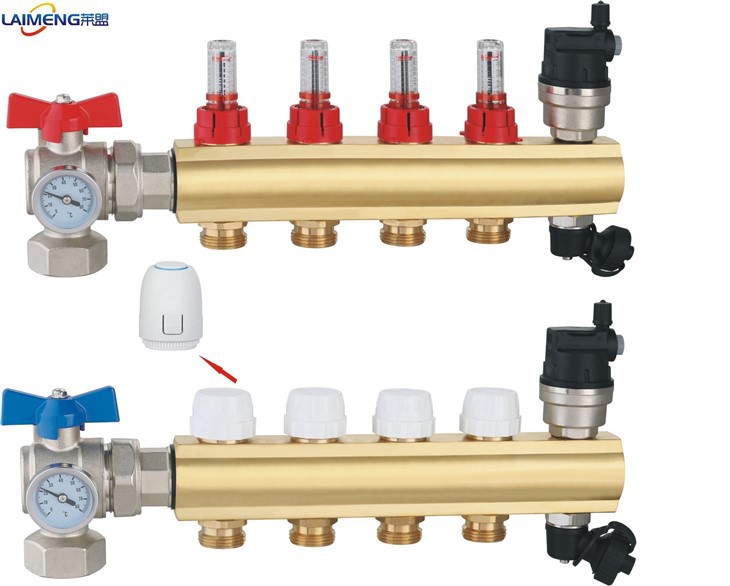
In heating and cooling systems, brass forged manifolds offer superior performance. Their high thermal conductivity allows for efficient heat transfer, which is essential for maintaining optimal system temperatures. For example, in a Brass Radiant Heating Manifold, brass can quickly transfer heat from the hot water to the surrounding environment, ensuring effective heating.
Plastic manifolds, on the other hand, have lower thermal conductivity, which can lead to slower heat transfer and reduced energy efficiency. Moreover, the temperature resistance of plastic may be a limiting factor in high - temperature heating systems.
Water Distribution Systems
For water distribution systems, brass forged manifolds are a reliable choice. Their corrosion resistance ensures that the water quality remains unaffected, and there is no risk of contamination from corroded materials. In addition, the high mechanical strength of brass can withstand the pressure variations in the water supply network.
Plastic manifolds may be suitable for low - pressure and small - scale water distribution systems. However, they are more prone to cracking and leaking over time, especially in areas with hard water or high - pressure fluctuations.
Industrial Processes
In industrial processes, brass forged manifolds are often preferred due to their ability to handle high - pressure and high - temperature fluids. They can also resist the corrosive effects of industrial chemicals. For example, in a chemical processing plant, a Brass Flow - meter Manifolds can accurately measure the flow of corrosive chemicals without being damaged.
Plastic manifolds may not be suitable for such harsh industrial environments, as they may degrade quickly under the influence of chemicals and high - pressure conditions.
Cost Considerations
Initial Cost
Plastic manifolds generally have a lower initial cost compared to brass forged manifolds. The raw materials for plastic are less expensive, and the manufacturing process is more cost - effective for mass production. This makes plastic an attractive option for budget - conscious projects.
Long - term Cost
However, when considering the long - term cost, brass forged manifolds may be more economical. Their durability and resistance to corrosion mean that they have a longer service life, reducing the need for frequent replacements. In addition, the lower maintenance requirements of brass manifolds can save on labor and material costs over time.
Environmental Impact
Brass Forged Manifolds
Brass is a recyclable material, which means that at the end of its service life, it can be melted down and reused to make new products. This reduces the environmental impact associated with waste disposal. Moreover, the long service life of brass forged manifolds means that fewer resources are consumed over time.
Plastic Manifolds
Plastic is also recyclable, but the recycling process for plastic is more complex and less efficient compared to brass. Additionally, many plastics are derived from fossil fuels, which have a significant environmental impact during extraction and production.
Conclusion
In conclusion, the choice between brass forged manifolds and plastic manifolds depends on various factors such as the application, budget, and environmental considerations. While plastic manifolds offer lower initial costs and ease of manufacturing, brass forged manifolds provide superior performance, durability, and long - term cost - effectiveness.
As a supplier of brass forged manifolds, I can offer high - quality products that are designed to meet the most demanding requirements. Whether you need a Brass Radiant Heating Manifold, a Brass Collectors Brass Water Manifold, or a Brass Flow - meter Manifolds, I can provide customized solutions that ensure optimal performance and reliability.
If you are interested in learning more about our brass forged manifolds or would like to discuss your specific project requirements, please feel free to contact me. I am always ready to assist you in making the right choice for your fluid management needs.
References
- ASM Handbook Committee, "ASM Handbook Volume 2: Properties and Selection: Nonferrous Alloys and Special - Purpose Materials", ASM International, 1990.
- Strong, A. B., "Plastics Materials and Processing", Pearson Prentice Hall, 2006.
- Incropera, F. P., and DeWitt, D. P., "Fundamentals of Heat and Mass Transfer", John Wiley & Sons, 2002.