




How are manifolds used in robotics?
 Jan 21, 2026|
 Hey there! As a manifold supplier, I've seen firsthand how manifolds play a crucial role in the world of robotics. In this blog, I'm gonna break down how these nifty devices are used in robotics and why they're so important.
What Are Manifolds Anyway?
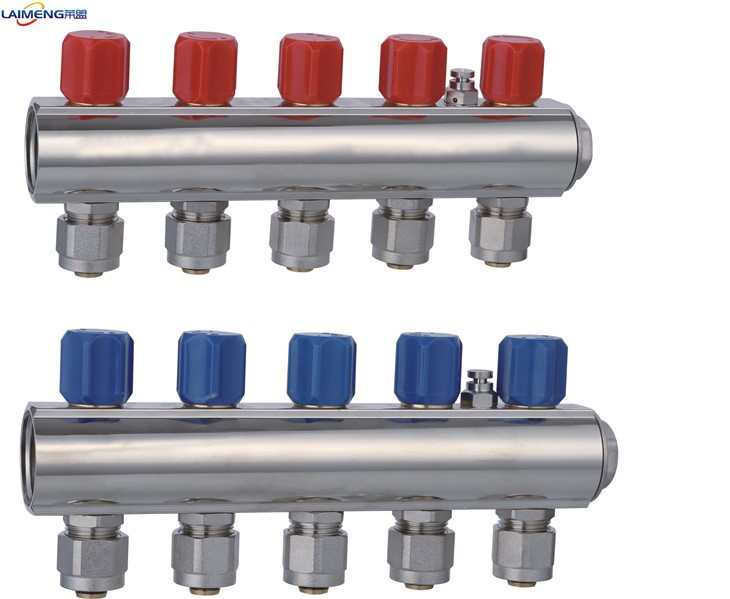
Before we dive into robotics, let's quickly go over what manifolds are. A manifold is basically a device that combines multiple inputs or outputs into a single channel or vice versa. It's like a traffic controller for fluids or gases, directing them where they need to go. We offer a variety of manifolds, such as Brass Flow-meter Manifolds, Brass Radiant Heating Manifold, and Brass Manifold for Heating System. These are just a few examples, but they give you an idea of the different types and applications.
Fluid Power Systems in Robotics
One of the main areas where manifolds are used in robotics is in fluid power systems. Fluid power systems use either hydraulic (liquids) or pneumatic (gases) power to move and control robotic components. Manifolds are essential in these systems because they help manage the flow of fluid or gas.
Hydraulic Manifolds
Hydraulic systems are known for their high power density, which means they can generate a lot of force in a relatively small space. This makes them ideal for heavy-duty robotic applications, like industrial robots used in manufacturing. Hydraulic manifolds in these robots are used to distribute hydraulic fluid to different actuators, such as cylinders and motors.
For example, in a large robotic arm used in an automotive assembly line, the hydraulic manifold ensures that the right amount of fluid is sent to each joint to make precise movements. It can also control the speed and direction of the movement by regulating the flow of fluid. This level of control is crucial for tasks like welding, painting, and lifting heavy parts.
Pneumatic Manifolds
Pneumatic systems, on the other hand, are often used in lighter-duty robotic applications. They're clean, fast, and relatively inexpensive compared to hydraulic systems. Pneumatic manifolds are used to distribute compressed air to various pneumatic actuators, like grippers and valves.
In a pick-and-place robot used in a packaging facility, the pneumatic manifold controls the air flow to the gripper. When the robot needs to pick up an item, the manifold sends compressed air to the gripper to close it around the object. When it's time to place the item, the manifold releases the air, allowing the gripper to open. This simple yet effective control mechanism is made possible by the pneumatic manifold.
Sensor Integration
Another important use of manifolds in robotics is in sensor integration. Robots rely on sensors to gather information about their environment and make decisions. Manifolds can be used to integrate multiple sensors into a single system.
For instance, in a robotic exploration vehicle, there might be sensors for measuring temperature, pressure, humidity, and proximity. A manifold can be used to connect these sensors to a central control unit. This not only simplifies the wiring and plumbing but also makes it easier to manage and process the data from all the sensors.
Modularity and Compact Design
Manifolds also contribute to the modularity and compact design of robotic systems. In modern robotics, there's a growing trend towards modular designs, where different components can be easily added, removed, or replaced. Manifolds make this possible by providing a standardized interface for connecting different parts of the system.
For example, a robot can be designed with a modular fluid power system. The manifold acts as a central hub, and different hydraulic or pneumatic modules can be attached to it. This makes it easy to customize the robot for different tasks or applications. Additionally, the compact design of manifolds helps save space inside the robot, which is especially important in applications where size is a constraint.
Maintenance and Reliability
When it comes to maintenance and reliability, manifolds have a big advantage. Since they centralize the flow control in a robotic system, it's easier to diagnose and fix problems. If there's an issue with the fluid or gas flow, technicians can quickly access the manifold to check for leaks, blockages, or other malfunctions.
Moreover, high-quality manifolds are designed to be durable and reliable. They're made from materials that can withstand the harsh conditions often found in robotic applications, such as high pressures, vibrations, and temperature variations. This means less downtime for the robot and more efficient operation overall.

Cost-Effectiveness
Manifolds can also help reduce costs in robotic systems. By integrating multiple functions into a single device, they eliminate the need for multiple individual valves and connectors. This not only saves on the cost of components but also reduces the labor and time required for installation and maintenance.
For example, instead of having separate valves for each actuator in a robotic system, a single manifold can be used to control all of them. This simplifies the system design and reduces the number of potential failure points, which ultimately leads to cost savings.
Conclusion
As you can see, manifolds play a vital role in robotics. From fluid power systems to sensor integration, modular design, maintenance, and cost-effectiveness, they offer a wide range of benefits. Whether you're working on a small educational robot or a large industrial machine, manifolds can help improve the performance and functionality of your robotic system.
If you're in the market for manifolds for your robotic project, we'd love to hear from you. We have a wide range of products to suit different needs and budgets. Whether it's a Brass Flow-meter Manifolds, Brass Radiant Heating Manifold, or something else, we can provide the right solution. Contact us to start a conversation about your requirements and let's work together to make your robotic project a success.
References
- "Robotics: Modelling, Planning and Control" by Bruno Siciliano et al.
- "Fluid Power Engineering" by George E. Totten.
- Various industry reports and technical papers on robotics and fluid power systems.