




Can brass forged manifolds be used in gas systems?
 Dec 31, 2025|
Brass forged manifolds have long been recognized for their durability, corrosion resistance, and malleability, making them a popular choice in various industrial applications. One question that frequently arises is whether these manifolds can be used in gas systems. As a supplier of brass forged manifolds, I am well-positioned to provide insights into this matter.
Understanding Brass Forged Manifolds
Brass is an alloy primarily composed of copper and zinc. The forging process involves shaping the metal under high pressure, which results in a more uniform and dense structure compared to cast brass. This enhanced structure gives forged brass manifolds several advantages, including greater strength, better resistance to cracking and leakage, and improved dimensional stability.
Suitability for Gas Systems
The use of brass forged manifolds in gas systems depends on several factors, including the type of gas, operating pressure, temperature, and regulatory requirements.
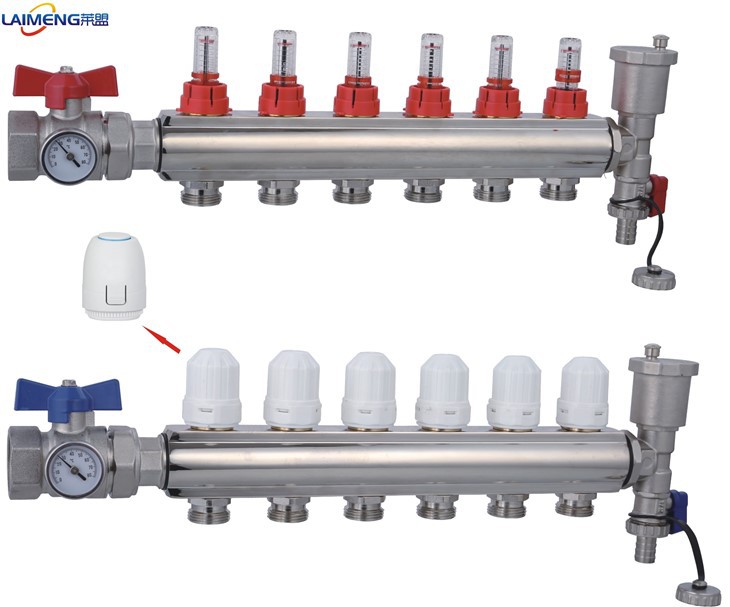

Type of Gas
Most common gases, such as natural gas, propane, and butane, are compatible with brass. Brass has a high resistance to corrosion from these gases, which helps prevent leaks and ensures the long - term integrity of the gas system. However, some gases, such as hydrogen sulfide or ammonia, can react with brass over time, causing corrosion. In such cases, additional protective coatings or alternative materials may be required.
Operating Pressure
Brass forged manifolds are designed to withstand a wide range of pressures. The strength of the forged brass allows it to handle moderate to high - pressure gas systems. However, it is crucial to select a manifold with a pressure rating that exceeds the maximum operating pressure of the gas system. This safety margin helps prevent failures due to pressure fluctuations.
Temperature
Temperature can also affect the performance of brass forged manifolds in gas systems. Brass has good thermal conductivity, which can be an advantage in some applications. However, extreme temperatures, either high or low, can cause the brass to expand or contract, potentially leading to leaks. It is essential to consider the operating temperature range of the gas system and select a manifold designed to withstand those conditions.
Regulatory Requirements
In many regions, the use of components in gas systems is subject to strict regulations. These regulations are in place to ensure the safety of the gas system and the people using it. Brass forged manifolds must meet specific standards and certifications to be used in gas systems. For example, in the United States, the NFPA (National Fire Protection Association) and ASME (American Society of Mechanical Engineers) have standards for gas system components. As a supplier, we ensure that our brass forged manifolds comply with all relevant regulations.
Advantages of Using Brass Forged Manifolds in Gas Systems
There are several advantages to using brass forged manifolds in gas systems:
Corrosion Resistance
As mentioned earlier, brass has excellent corrosion resistance, which is crucial in gas systems where leaks can be dangerous. The protective oxide layer that forms on the surface of the brass helps prevent further corrosion.
Machinability
Brass is relatively easy to machine, allowing for the production of complex manifold designs. This means that we can customize brass forged manifolds to meet the specific requirements of different gas systems.
Cost - Effectiveness
Compared to some alternative materials, such as stainless steel or titanium, brass is more cost - effective. This makes brass forged manifolds an attractive option for gas system applications, especially in large - scale projects.
Applications in Gas Systems
Brass forged manifolds are used in a variety of gas system applications, including:
Residential Gas Systems
In homes, brass forged manifolds are commonly used in natural gas distribution systems. They are used to connect gas appliances, such as stoves, water heaters, and furnaces, to the main gas supply.
Commercial and Industrial Gas Systems
In commercial and industrial settings, brass forged manifolds are used in larger - scale gas distribution systems. They can be found in restaurants, factories, and power plants, among other places.
Related Products
We also offer a range of related brass manifold products:
- Brass Collectors Brass Water Manifold: These manifolds are designed for water distribution systems but can also be adapted for some low - pressure gas applications.
- Brass Flow - meter Manifolds: These manifolds are used in conjunction with flow meters to measure the flow of gas in a system accurately.
- Brass Casting Manifolds: While not forged, these casting manifolds are suitable for some less - demanding gas system applications.
Conclusion
In conclusion, brass forged manifolds can be used in gas systems, provided that the appropriate considerations are taken into account. Their corrosion resistance, strength, machinability, and cost - effectiveness make them a viable option for a wide range of gas system applications. As a supplier of brass forged manifolds, we are committed to providing high - quality products that meet or exceed industry standards.
If you are considering using brass forged manifolds in your gas system, we encourage you to contact us to discuss your specific requirements. Our team of experts can help you select the right manifold for your application and ensure that it complies with all relevant regulations. We look forward to the opportunity to work with you and provide you with the best possible solutions for your gas system needs.
References
- "Metals in Gas Systems: Properties and Applications" - Journal of Industrial Metallurgy
- "Gas System Design and Installation Manual" - NFPA Publications
- "Brass Alloys: Composition and Performance" - ASM International Handbook