




Can brass forged manifolds be used in automotive applications?
 May 12, 2025|
Brass forged manifolds have long been a staple in various industrial applications, thanks to their unique combination of strength, corrosion resistance, and malleability. As a leading supplier of brass forged manifolds, I often get asked whether these components can be used in automotive applications. In this blog post, I'll explore the suitability of brass forged manifolds for automotive use, highlighting their advantages, limitations, and potential applications.
Advantages of Brass Forged Manifolds in Automotive Applications
1. Corrosion Resistance
One of the primary benefits of using brass forged manifolds in automotive applications is their excellent corrosion resistance. Brass is an alloy of copper and zinc, which provides a natural protective layer that prevents rust and corrosion. This is particularly important in automotive environments, where components are exposed to moisture, road salt, and other corrosive substances. By using brass forged manifolds, automotive manufacturers can ensure the longevity and reliability of their vehicles, reducing the risk of component failure due to corrosion.

2. Strength and Durability
Brass forged manifolds are known for their high strength and durability. The forging process involves shaping the brass under high pressure, which aligns the grain structure of the metal and enhances its mechanical properties. This results in a manifold that can withstand high pressures, vibrations, and temperature variations without cracking or deforming. In automotive applications, where components are subjected to extreme conditions, the strength and durability of brass forged manifolds are crucial for ensuring the safety and performance of the vehicle.
3. Machinability
Brass is a highly machinable material, which means it can be easily shaped and formed into complex geometries. This makes it an ideal choice for manufacturing automotive manifolds, which often require intricate designs to accommodate multiple fluid channels and connections. The machinability of brass also allows for precise tolerances, ensuring a perfect fit and seal between the manifold and other components. This helps to prevent leaks and improve the overall efficiency of the automotive system.
4. Thermal Conductivity
Brass has excellent thermal conductivity, which means it can efficiently transfer heat away from critical components. In automotive applications, this is particularly important for engines, where excessive heat can cause damage to the engine block, pistons, and other parts. By using brass forged manifolds, automotive manufacturers can help to dissipate heat more effectively, reducing the risk of overheating and improving the performance and reliability of the engine.
Limitations of Brass Forged Manifolds in Automotive Applications
1. Cost
One of the main limitations of using brass forged manifolds in automotive applications is their cost. Brass is a relatively expensive material compared to other metals, such as steel or aluminum. The forging process also adds to the cost of manufacturing, as it requires specialized equipment and skilled labor. As a result, brass forged manifolds can be more expensive than other types of manifolds, which may make them less attractive to automotive manufacturers on a tight budget.
2. Weight
Brass is a relatively heavy material, which can add to the overall weight of the vehicle. In automotive applications, where weight reduction is a key factor in improving fuel efficiency and performance, the weight of brass forged manifolds may be a disadvantage. However, advances in manufacturing technology have allowed for the production of lighter brass forged manifolds, which can help to mitigate this issue.
3. Compatibility with Certain Fluids
While brass is generally resistant to corrosion, it may not be compatible with certain fluids, such as fuels or lubricants that contain high levels of sulfur or other corrosive substances. In these cases, the use of brass forged manifolds may result in corrosion or degradation of the manifold, which can lead to leaks and other problems. Automotive manufacturers need to carefully consider the compatibility of brass forged manifolds with the fluids used in their vehicles to ensure the long-term reliability of the components.
Potential Applications of Brass Forged Manifolds in Automotive
1. Cooling Systems
Brass forged manifolds can be used in automotive cooling systems to distribute coolant to various parts of the engine. The excellent thermal conductivity of brass helps to dissipate heat more effectively, preventing the engine from overheating. Additionally, the corrosion resistance of brass ensures the longevity of the manifold, reducing the risk of leaks and other cooling system failures.
2. Fuel Systems
In some automotive applications, brass forged manifolds can be used in fuel systems to regulate the flow of fuel to the engine. The machinability of brass allows for the production of precise fuel channels and connections, ensuring a consistent and efficient fuel supply. However, as mentioned earlier, the compatibility of brass with certain fuels needs to be carefully considered to prevent corrosion and other issues.
3. Hydraulic Systems
Brass forged manifolds are also suitable for use in automotive hydraulic systems, such as power steering and brake systems. The strength and durability of brass make it capable of withstanding the high pressures and forces generated in these systems. The corrosion resistance of brass also helps to prevent the formation of rust and other contaminants, which can affect the performance of the hydraulic system.
Our Product Offerings
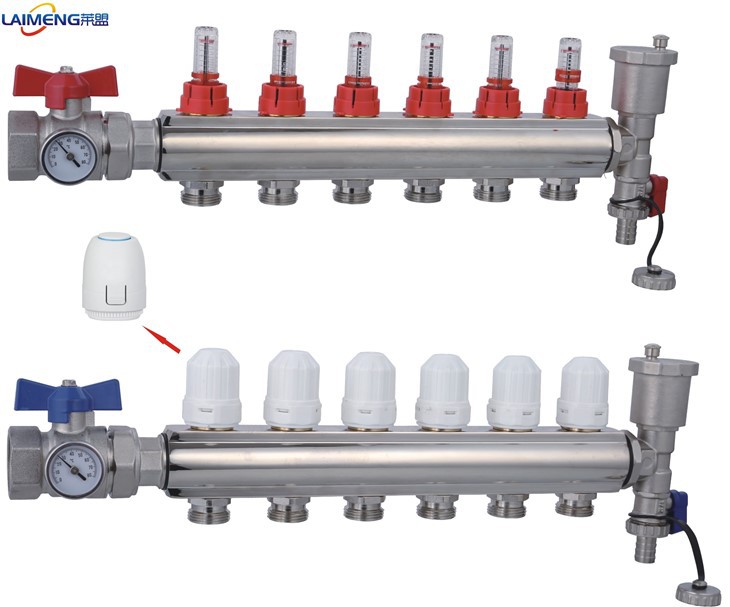
As a supplier of brass forged manifolds, we offer a wide range of products that are suitable for automotive applications. Our Brass Manifold With Flowmeter is designed to accurately measure and control the flow of fluids in automotive systems. The flowmeter provides real-time data, allowing for precise adjustment of the fluid flow rate.

Our Brass Flow-meter Manifolds are another popular choice for automotive applications. These manifolds combine the functionality of a flowmeter with the distribution capabilities of a manifold, providing a compact and efficient solution for fluid management.
For automotive heating systems, we offer Brass Manifold for Heating System. These manifolds are designed to distribute hot water or other heating fluids evenly throughout the system, ensuring efficient heating and comfort.

Conclusion
In conclusion, brass forged manifolds can be used in automotive applications, offering several advantages such as corrosion resistance, strength, machinability, and thermal conductivity. However, they also have some limitations, including cost, weight, and compatibility with certain fluids. Despite these limitations, brass forged manifolds have a wide range of potential applications in automotive cooling, fuel, and hydraulic systems.
If you're interested in learning more about our brass forged manifolds or discussing potential applications in your automotive projects, we encourage you to contact us for a procurement discussion. Our team of experts is ready to assist you in finding the right solution for your needs.
References
- ASM Handbook Committee. (2000). ASM Handbook, Volume 6: Welding, Brazing, and Soldering. ASM International.
- Callister, W. D., & Rethwisch, D. G. (2012). Materials Science and Engineering: An Introduction. Wiley.
- Dieter, G. E. (1986). Mechanical Metallurgy. McGraw-Hill.