




Can a brass manifold be used in water systems?
 Jan 20, 2026|
 In the realm of water systems, the choice of components is crucial for ensuring efficiency, durability, and safety. Among the various materials available for constructing water system parts, brass has long been a popular option due to its numerous advantageous properties. As a dedicated brass manifold supplier, I am often asked whether a brass manifold can be used in water systems. In this blog, I will delve into the details to provide a comprehensive answer.
Properties of Brass that Make It Suitable for Water Systems
Brass is an alloy primarily composed of copper and zinc, with other elements sometimes added in small quantities to enhance specific properties. This combination endows brass with several characteristics that make it an excellent candidate for use in water systems.
1. Corrosion Resistance
One of the most significant advantages of brass in water systems is its exceptional corrosion resistance. Copper, a major component of brass, forms a protective oxide layer when exposed to water and oxygen. This layer acts as a barrier, preventing further corrosion and extending the lifespan of the manifold. In both potable water and heating systems, where exposure to water is constant, this corrosion resistance is crucial for maintaining the integrity of the system and preventing leaks that could lead to water damage.

2. Durability
Brass is a relatively hard and strong material, capable of withstanding high pressures and mechanical stresses commonly encountered in water systems. This durability ensures that the brass manifold can handle the rigors of daily use without deforming or breaking. Whether in a large - scale commercial water supply network or a small residential plumbing system, a brass manifold can provide reliable service over an extended period.
3. Machinability
Brass is highly machinable, which means it can be easily shaped and fabricated into complex manifold designs. Manufacturers can produce brass manifolds with precise dimensions and fittings, ensuring a perfect fit in various water system configurations. This ease of machining also allows for customization, enabling the creation of manifolds tailored to specific requirements of different projects.
4. Thermal Conductivity
In heating systems, the thermal conductivity of brass is a valuable property. It allows for efficient transfer of heat from the hot water flowing through the manifold to the surrounding environment. This is particularly important in radiant heating systems, where the manifold distributes hot water to different zones of a building. The high thermal conductivity of brass ensures that heat is transferred quickly and evenly, maximizing the efficiency of the heating system.
Applications of Brass Manifolds in Different Water Systems
1. Potable Water Systems
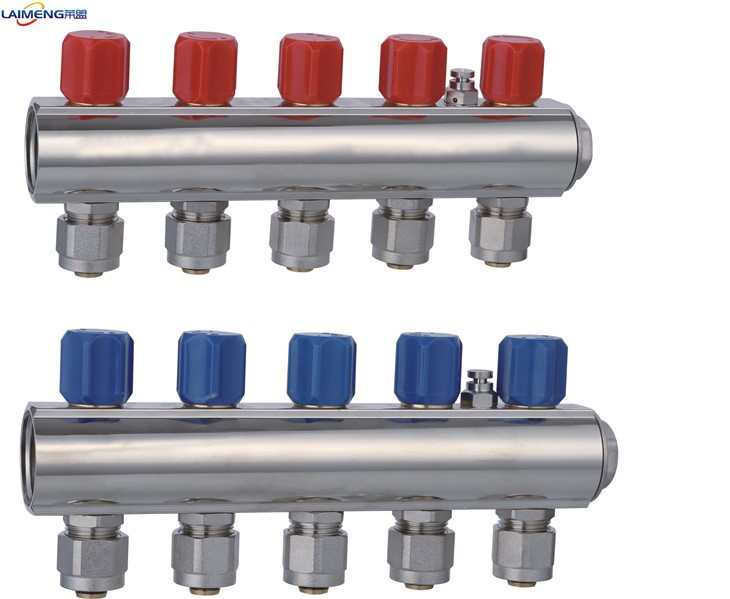
Brass manifolds are commonly used in potable water distribution systems. They are used to connect multiple pipes and distribute water to different fixtures in a building, such as faucets, showers, and toilets. The corrosion resistance of brass ensures that the water remains clean and free from contaminants, making it safe for drinking and other domestic uses. Our Brass Collectors Brass Water Manifold is specifically designed for such applications, with features that meet the strict standards for potable water systems.
2. Heating Systems
In both residential and commercial heating systems, brass manifolds play a vital role. In a hydronic heating system, for example, the manifold distributes hot water from the boiler to the various radiators or under - floor heating loops. The durability and thermal conductivity of brass make it an ideal choice for this application. Our Brass Radiant Heating Manifold is engineered to provide efficient heat distribution in radiant heating systems, ensuring a comfortable indoor temperature.
3. Cooling Systems
Brass manifolds can also be used in cooling systems, such as those found in industrial equipment or air - conditioning units. They are used to distribute chilled water to different cooling coils or heat exchangers. The corrosion resistance and durability of brass ensure that the manifold can withstand the low - temperature and high - pressure conditions in these systems, providing reliable cooling performance.
4. Floor Heating Systems
For floor heating systems, a brass manifold with a flow meter can offer enhanced control over the heating process. Our Brass Collectors Brass Water Manifold With Flow Meter For Floor Heating Systems Parts allows for precise adjustment of the water flow rate to each heating loop, ensuring uniform heating across the floor area. This not only improves the comfort level but also helps in energy conservation.
Considerations when Using Brass Manifolds in Water Systems
While brass manifolds offer many advantages, there are also some considerations to keep in mind.
1. Water Quality
The quality of the water in the system can affect the performance and lifespan of the brass manifold. Water with high levels of chlorine, sulfur, or other chemicals can accelerate corrosion of the brass. In such cases, additional protective coatings or treatments may be required to minimize the impact of water chemistry on the manifold.
2. Compatibility with Other Materials
When installing a brass manifold in a water system, it is important to ensure compatibility with other materials used in the system. For example, if the manifold is connected to pipes made of different metals, there is a risk of galvanic corrosion. This can be mitigated by using appropriate insulation or dielectric unions to prevent direct contact between dissimilar metals.
3. Pressure and Temperature Ratings
It is essential to select a brass manifold with the appropriate pressure and temperature ratings for the specific water system. Operating the manifold beyond its rated capacity can lead to premature failure or safety hazards. Always refer to the manufacturer's specifications and guidelines when choosing a brass manifold.
Conclusion
In conclusion, a brass manifold is a versatile and reliable component that can be effectively used in a wide range of water systems. Its corrosion resistance, durability, machinability, and thermal conductivity make it well - suited for potable water distribution, heating, cooling, and floor heating applications. However, proper consideration of water quality, compatibility with other materials, and pressure and temperature ratings is necessary to ensure optimal performance and longevity.
If you are in the process of designing or upgrading a water system and are considering using a brass manifold, I encourage you to get in touch for a detailed discussion. We, as a professional brass manifold supplier, have the expertise and a wide range of products to meet your specific needs. Let's work together to create a high - quality and efficient water system.
References
- ASM Handbook, Volume 2: Properties and Selection: Nonferrous Alloys and Special - Purpose Materials. ASM International.
- "Handbook of Plumbing Engineering" by Warren Y. Kim. McGraw - Hill Education.
- "The Illustrated Guide to Hydronic Heating" by John Siegenthaler. North American Radiant Heating & Cooling Association.